Tokyo - day 3 - Mori Art and Meiji Jingu
Mori Art Museum
Today we started by visiting the Mori Art museum. It’s situated in Mori Tower in the neighborhood Roppongi Hills. The Mori Tower is a huge skyscraper that contains shops, restaurants and museums and resembles a city in itself.
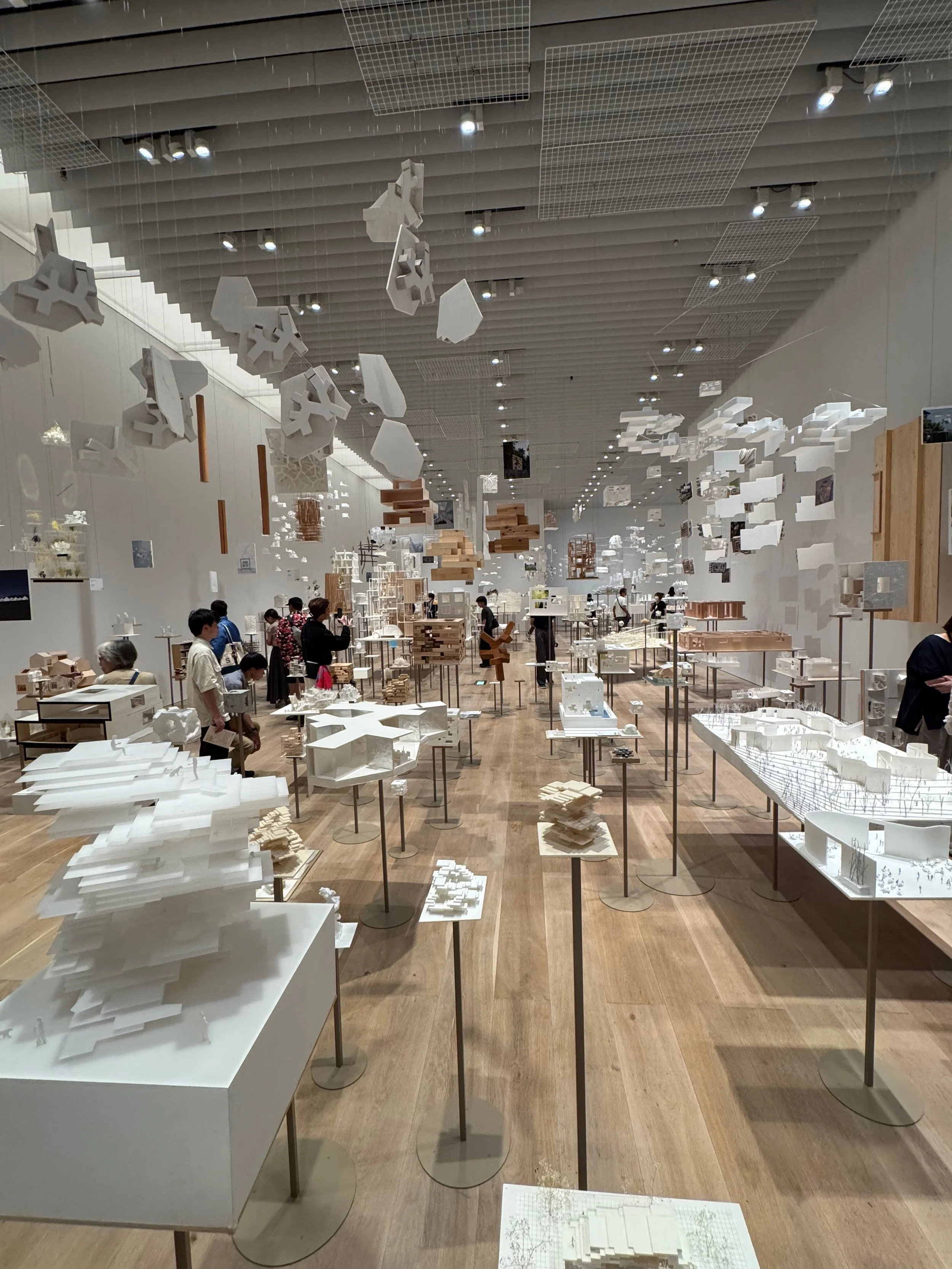
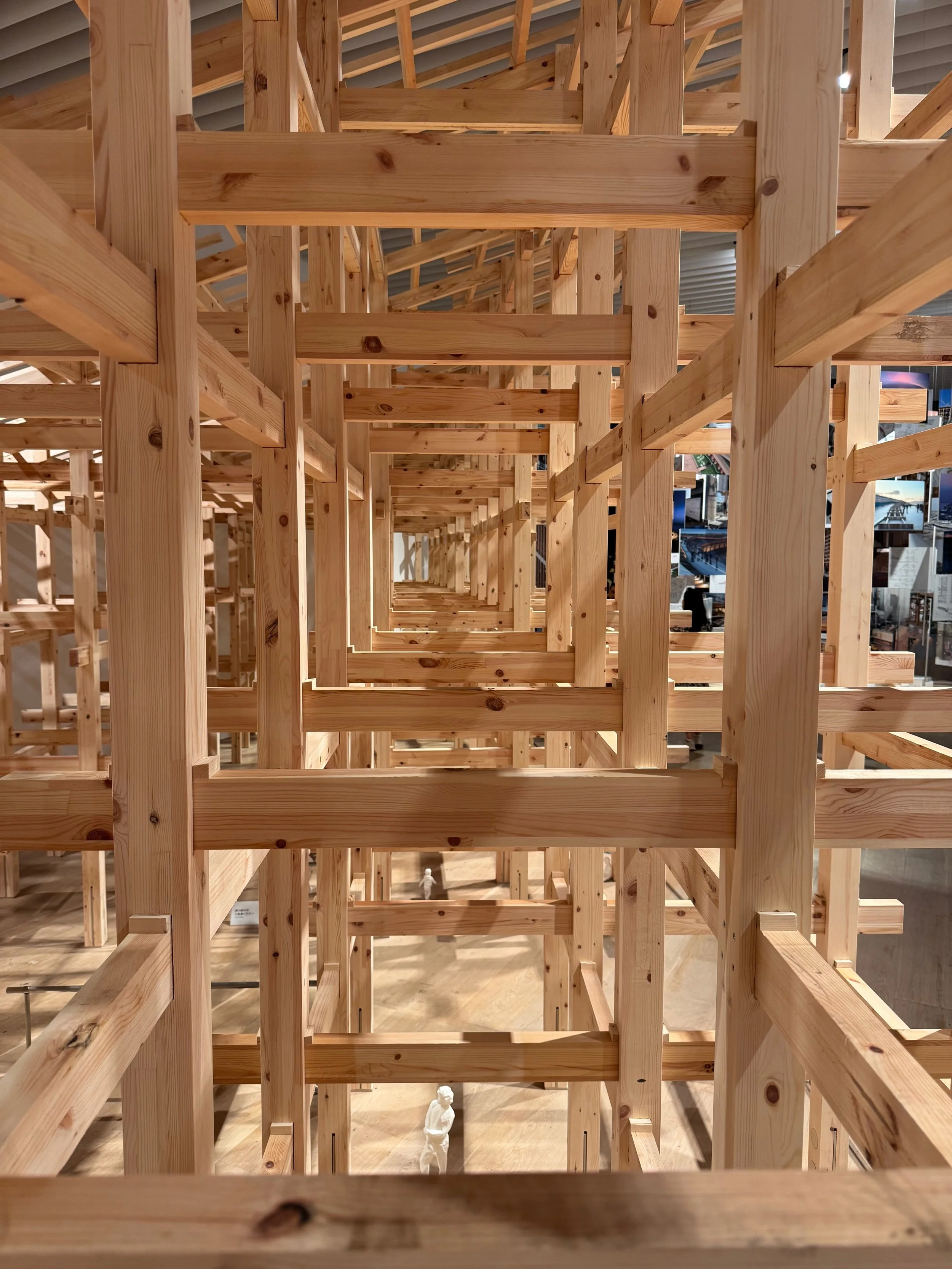
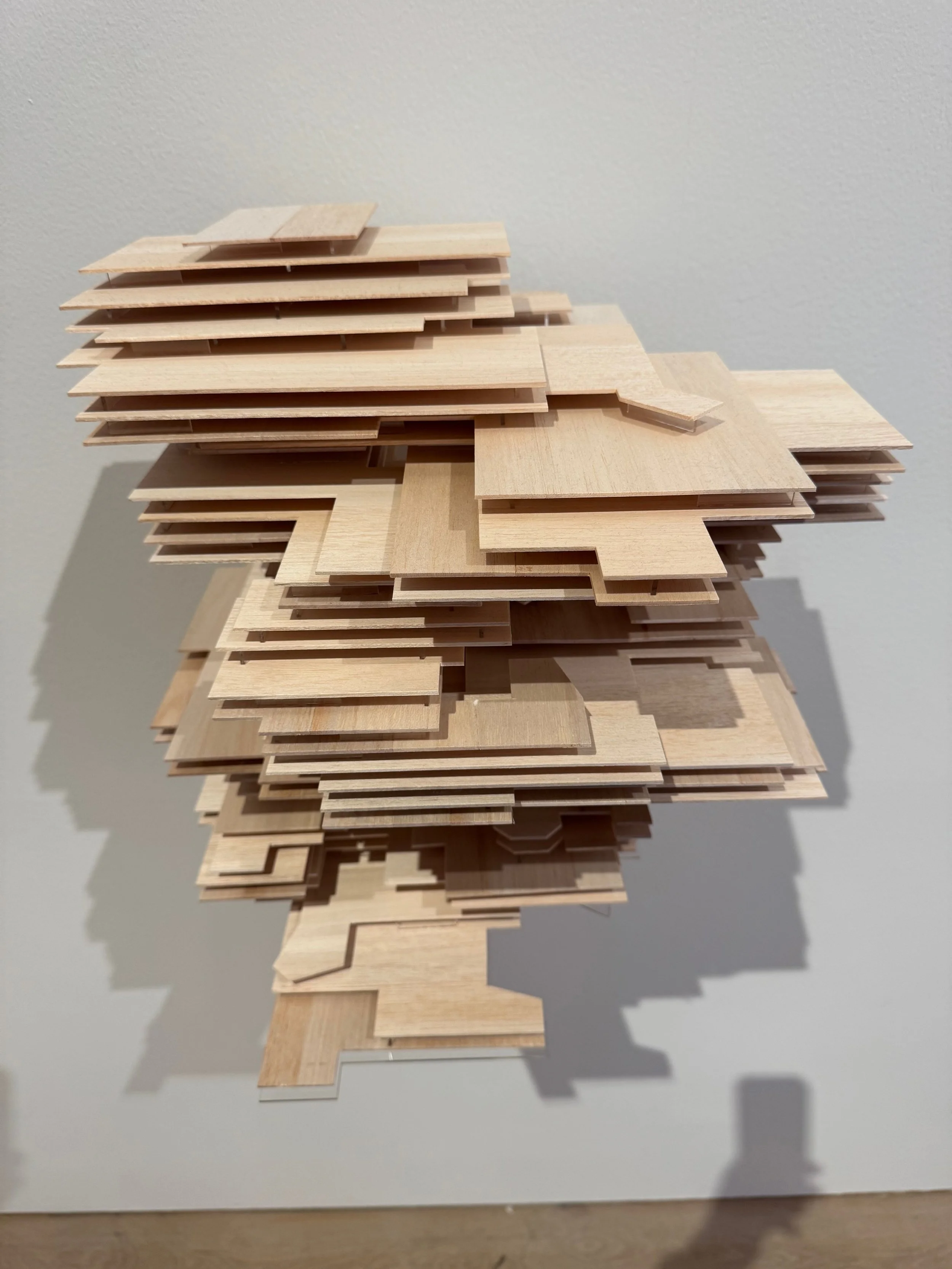
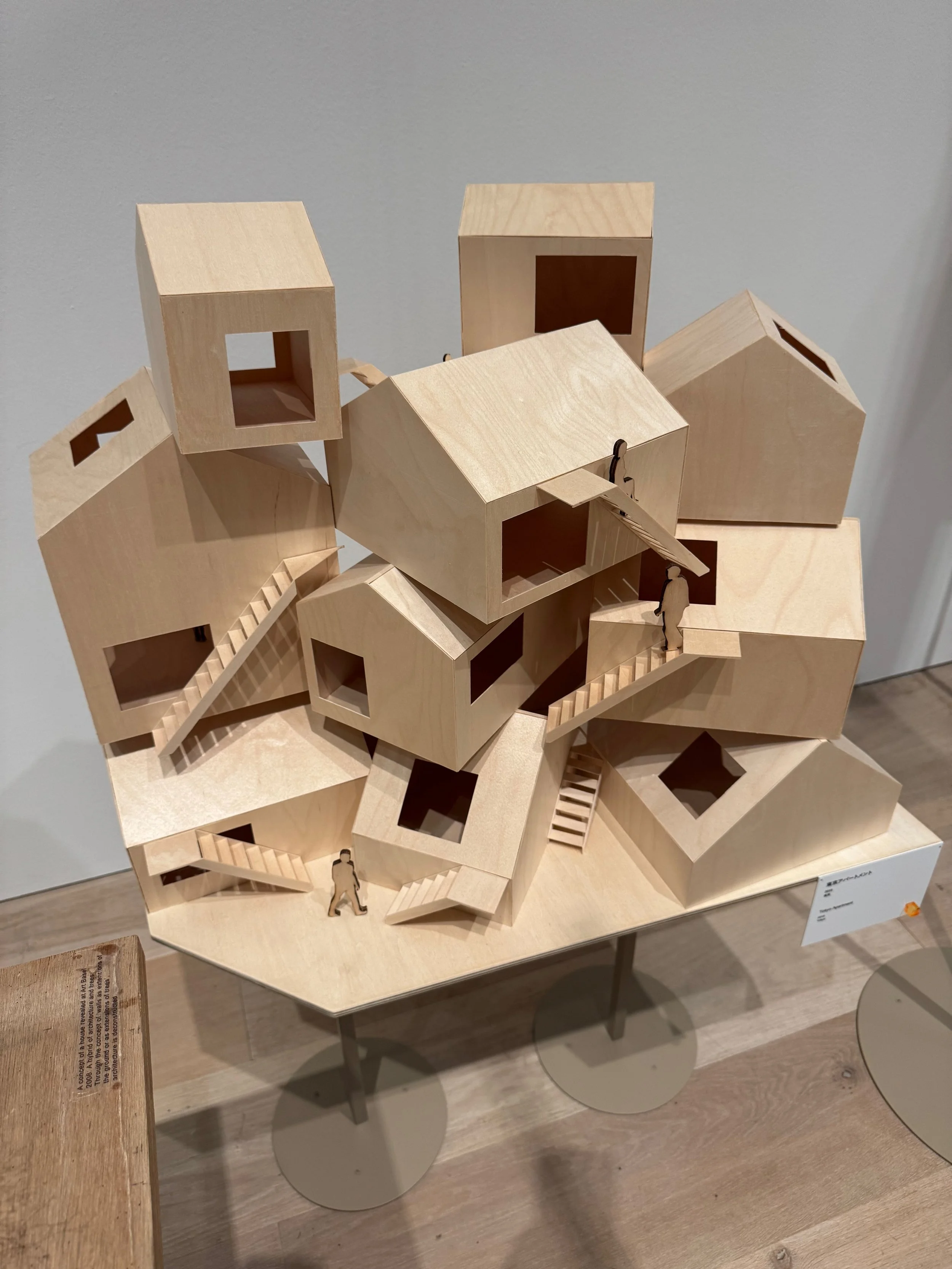
At the moment of our visit, the museum featured an overview exhibition of works of Sou Fujimoto, a famous architect of many iconic objects, one of the latest being the Grand Ring of the Osaka World Expo (see photo of a 1:5 model at the exhibition). His works are presented as scale models in one large hall, categorized in various “genealogies”. Many works are striking because of their simplicity and complexity at once, use of primitive shapes like cubes and using surprising angles and perspectives, like a skyscraper consisting of cubes arranged as tree branches or a ship in the shape of an island floating in the ocean, containing its own parks, houses and pools.
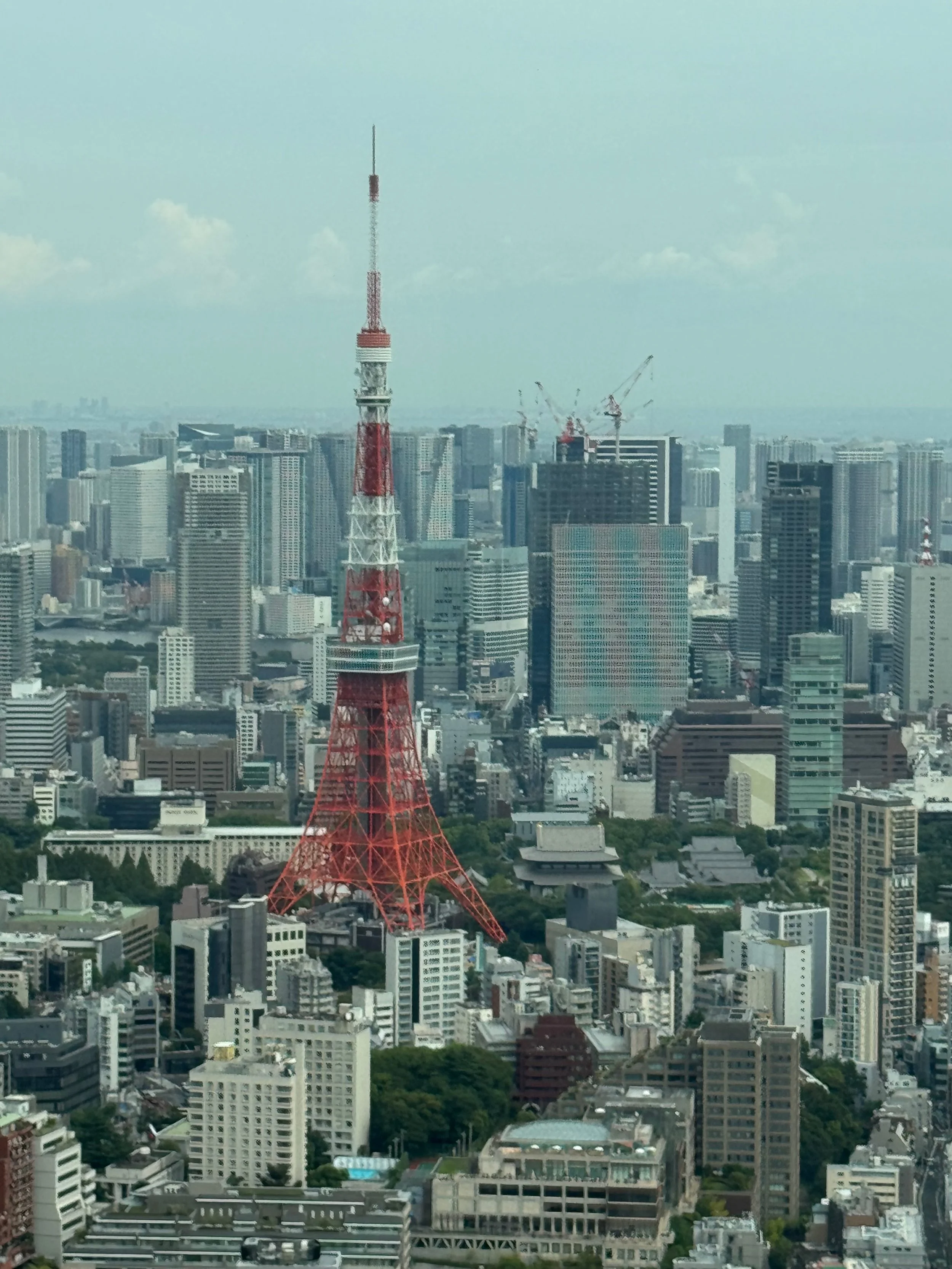
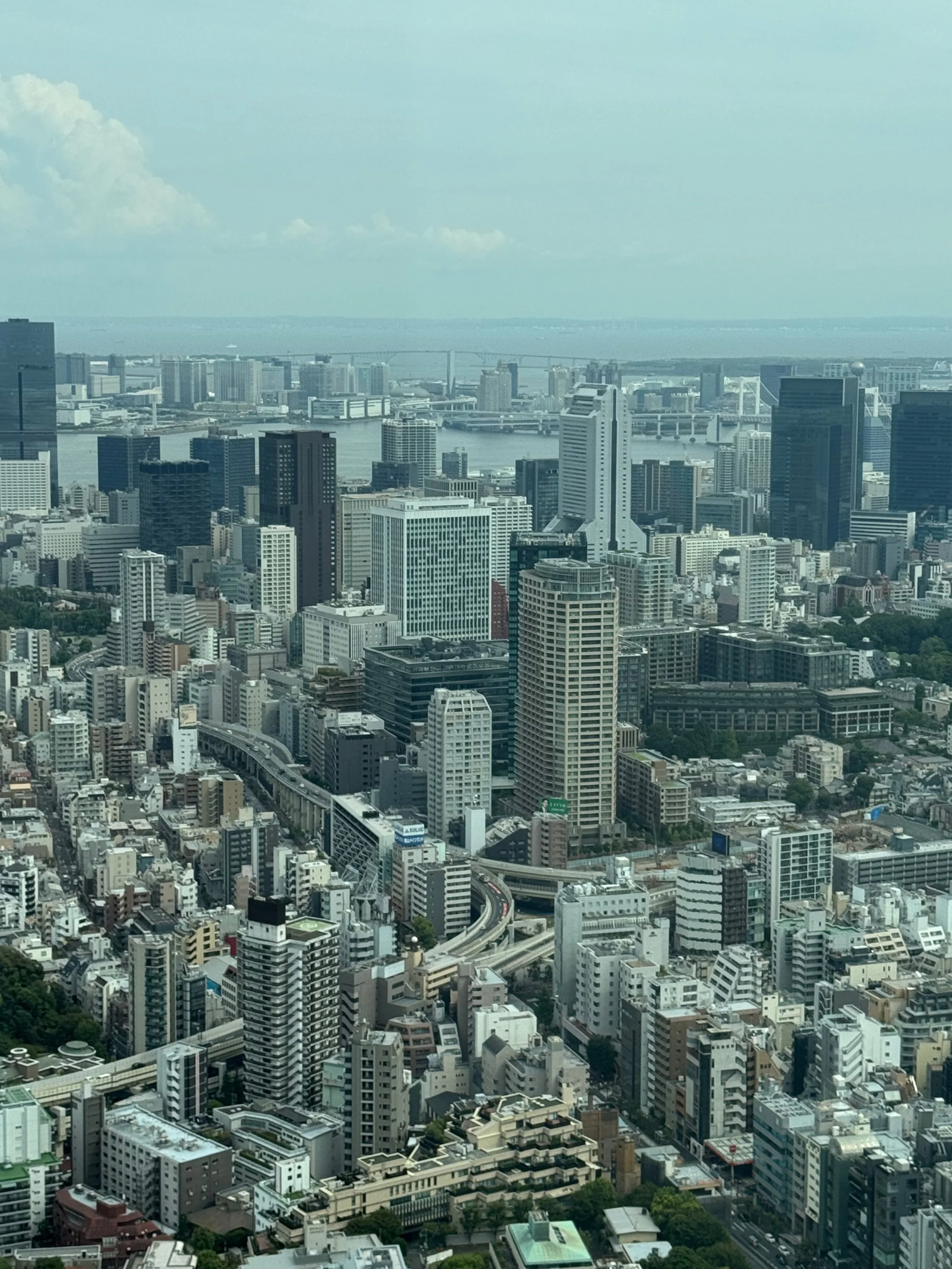
On the same floor as the Mori Art museum there are also the Mori Art Center Gallery (which we skipped) and Tokyo City View, which is a corridor around the Mori Tower with a tall glass window outlooking Tokyo, which offers breathtaking. Mount Fuji was unfortunately behind clouds today. The Tokyo City View also showed an exhibition of Leiji Matsumoto, one of the founders of the famous Japanese Manga comic style.
Meiji Jingu
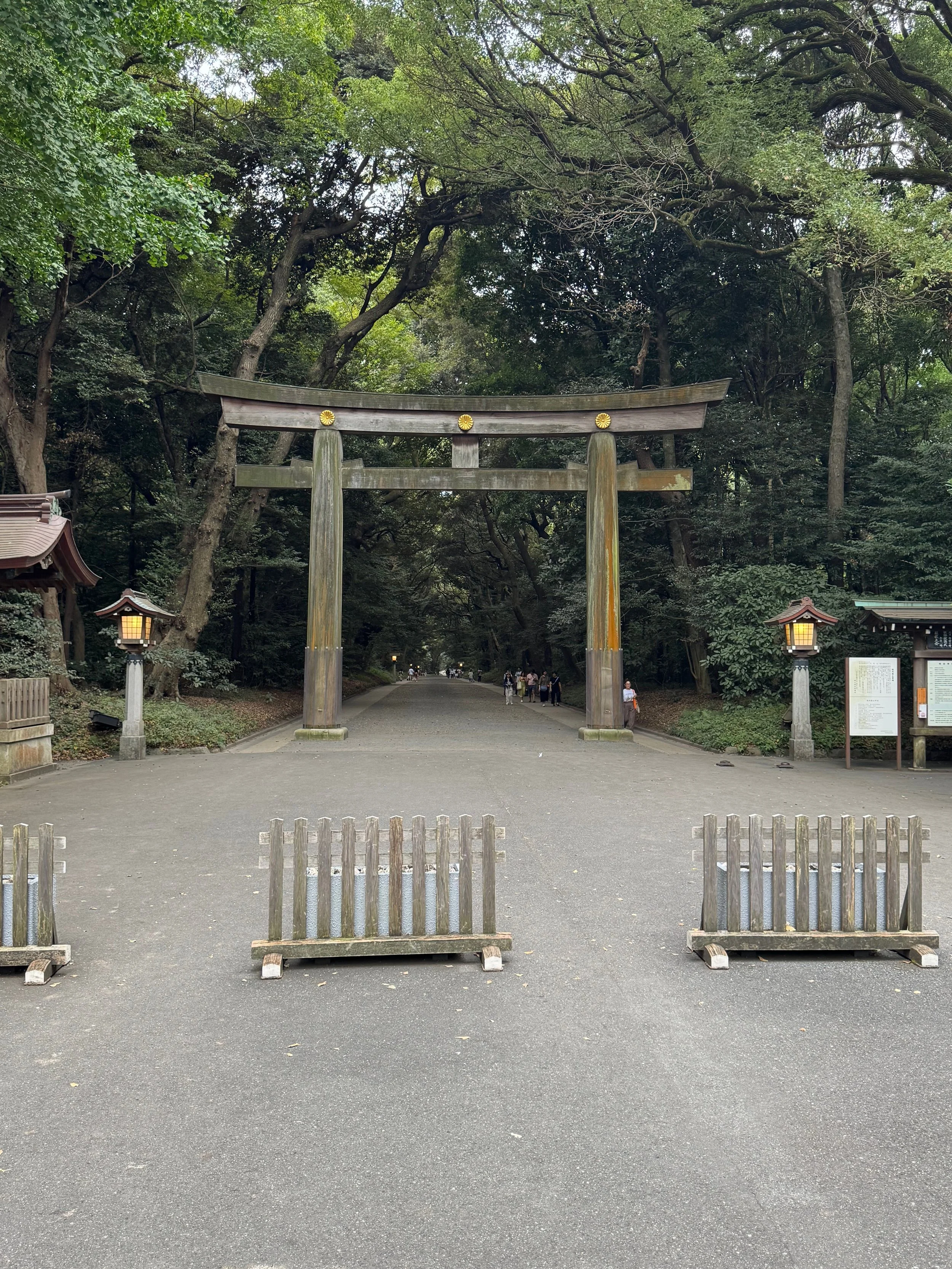
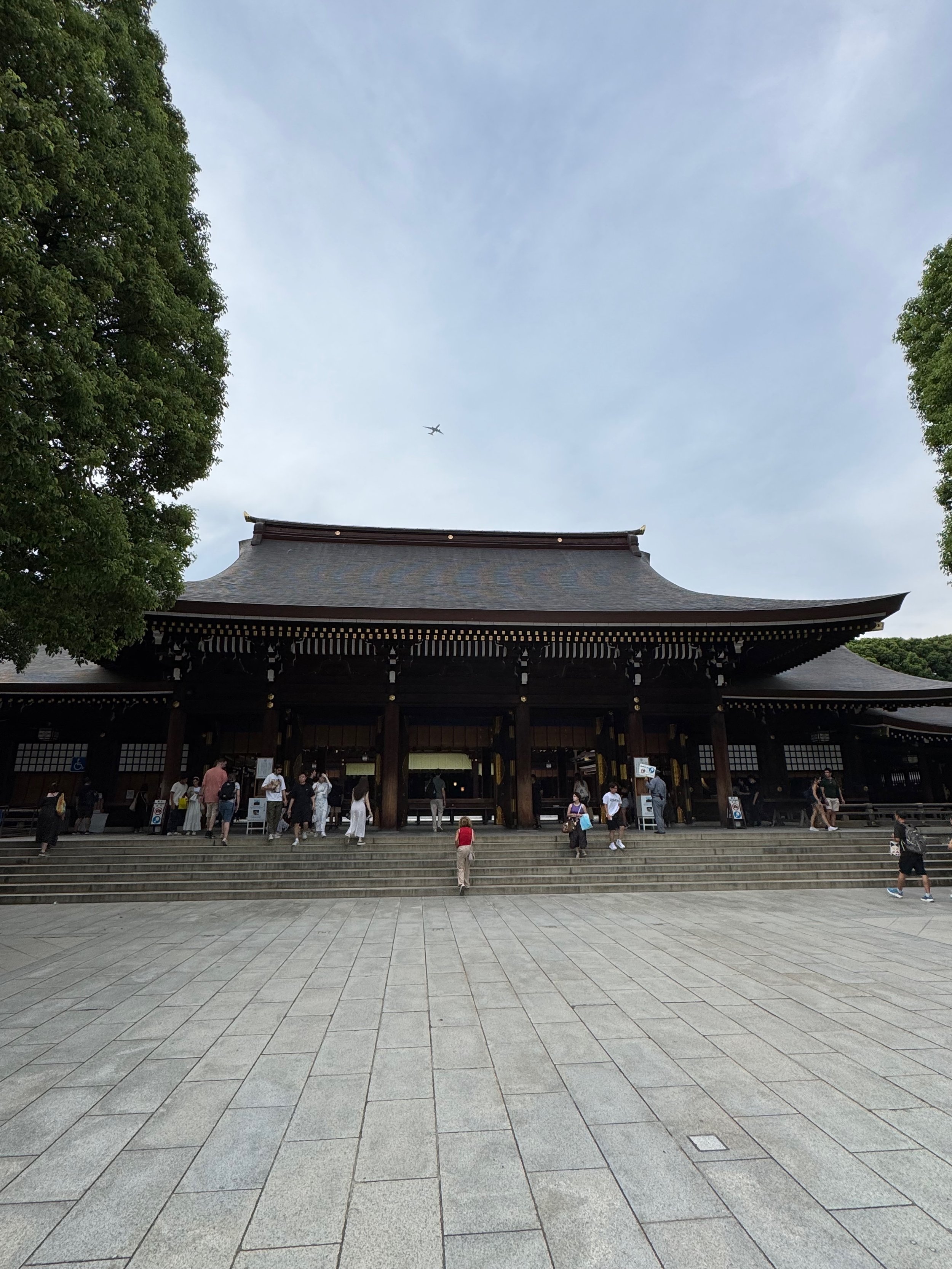
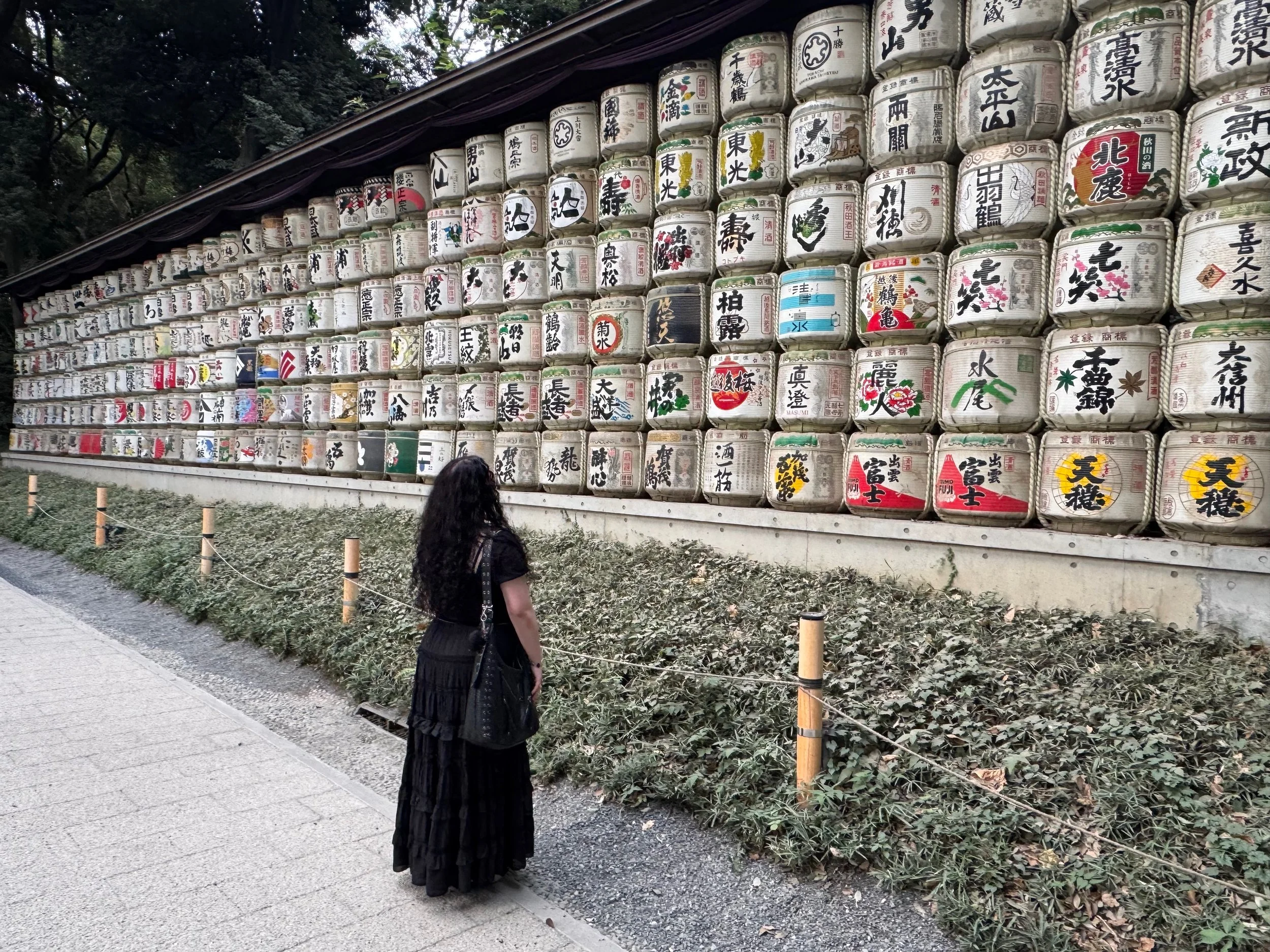
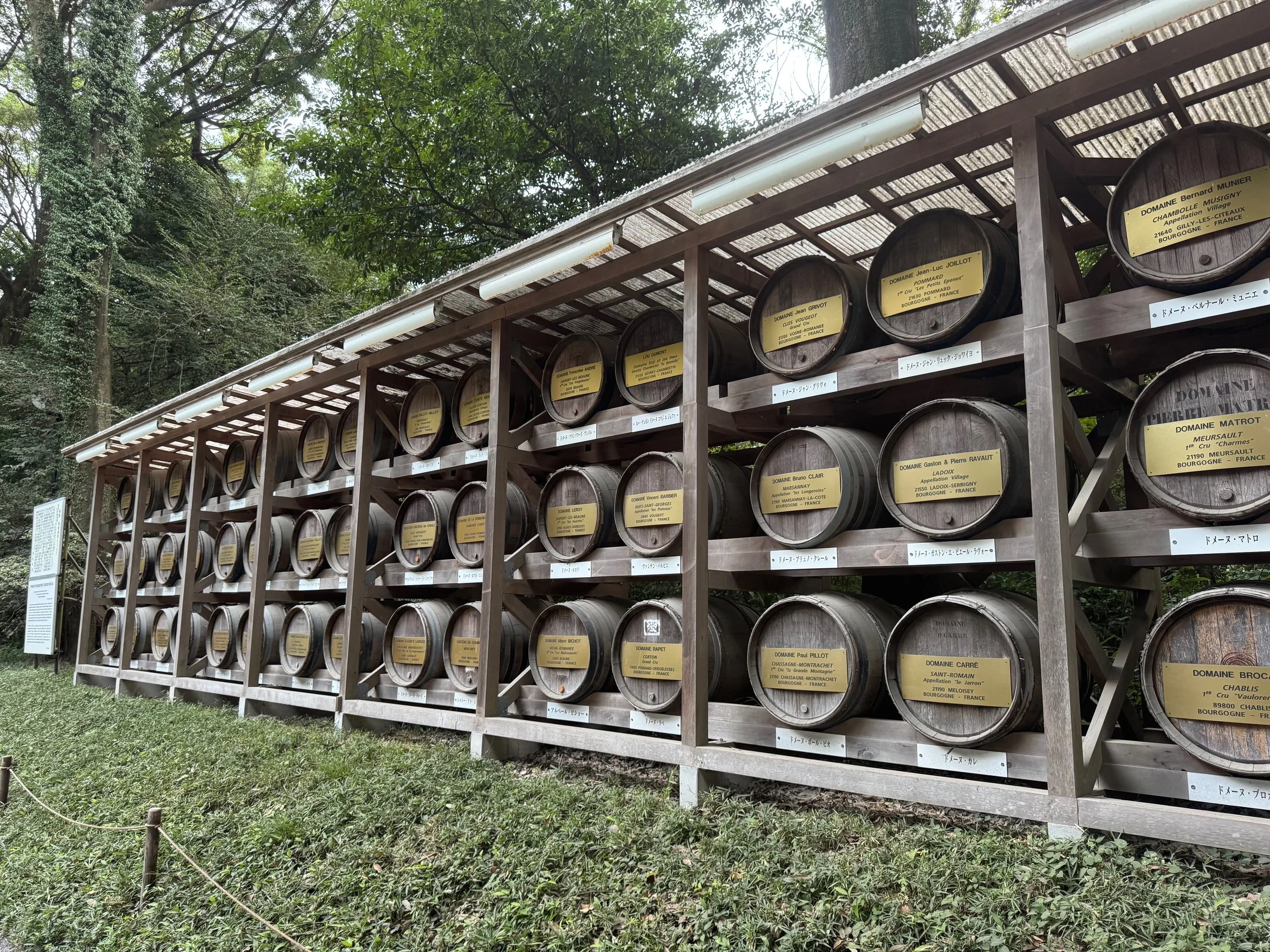
Meiji Jingu is an important Shinto shrine in the middle of a large forest of 100000 trees. The spirit of Emperor Meiji and his consort Empress Shōken are enshrined here. The shrine complex itself and the roads through the park are built on such an immense scale that it feels less like a space for people and more like a realm belonging to the gods. We performed the purification ritual (the rinsing of hands and mouth) and the praying ritual.
Ōmigokoro waka
By offering ¥100 one can also participate in the Ōmigokoro ritual. By shaking a box and getting a numbered stick, you then open a small drawer with the stick number. From the drawer you take a poem called waka. It is hoped that you are able to receive benefits from its Shinto ethics by applying its wisdom to your life.