Day 12-14: Kyoto
The following days we soaked up Kyoto’s atmosphere while moving around the city by foot, bus and e-bike!
Kimono
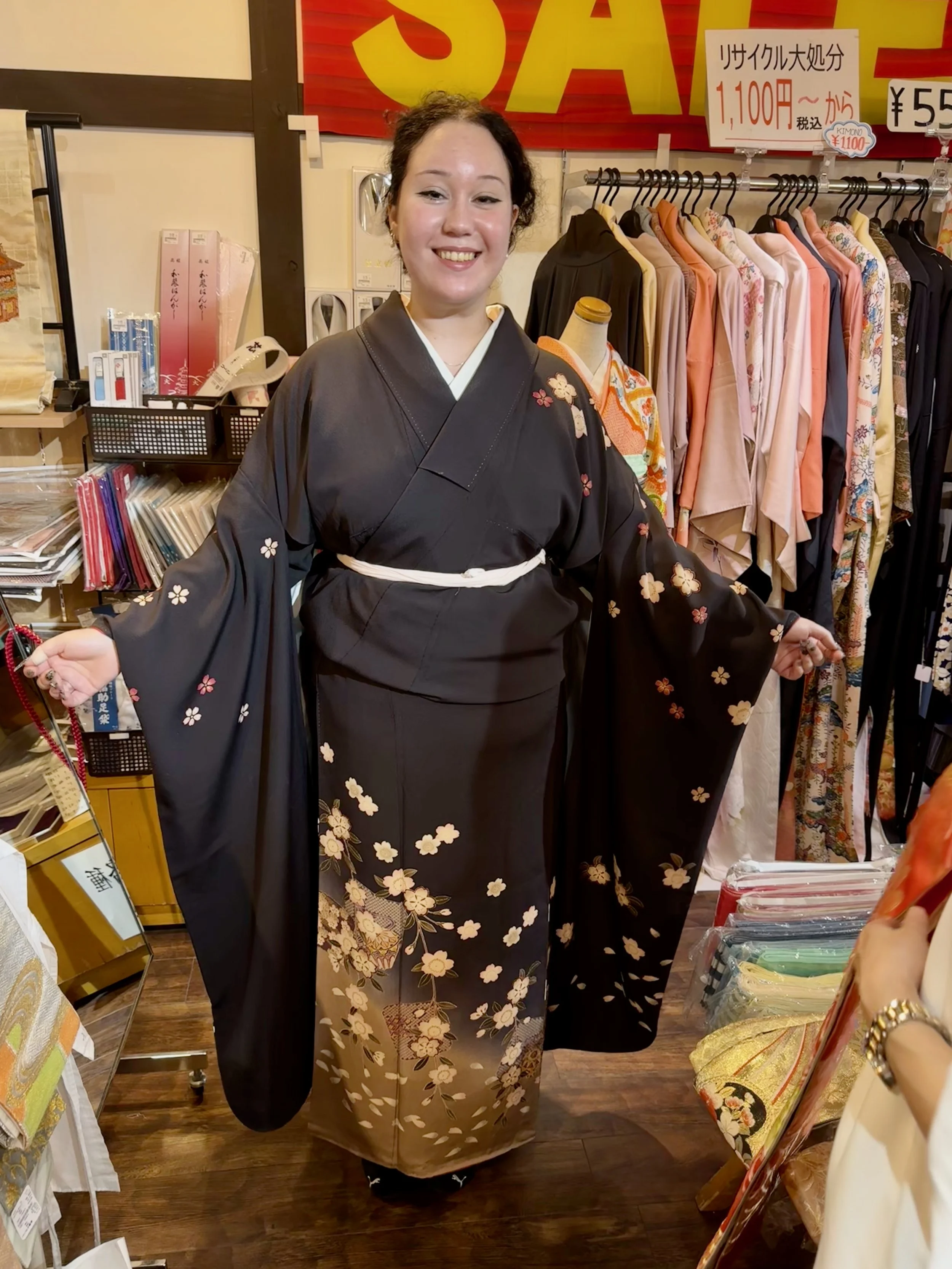
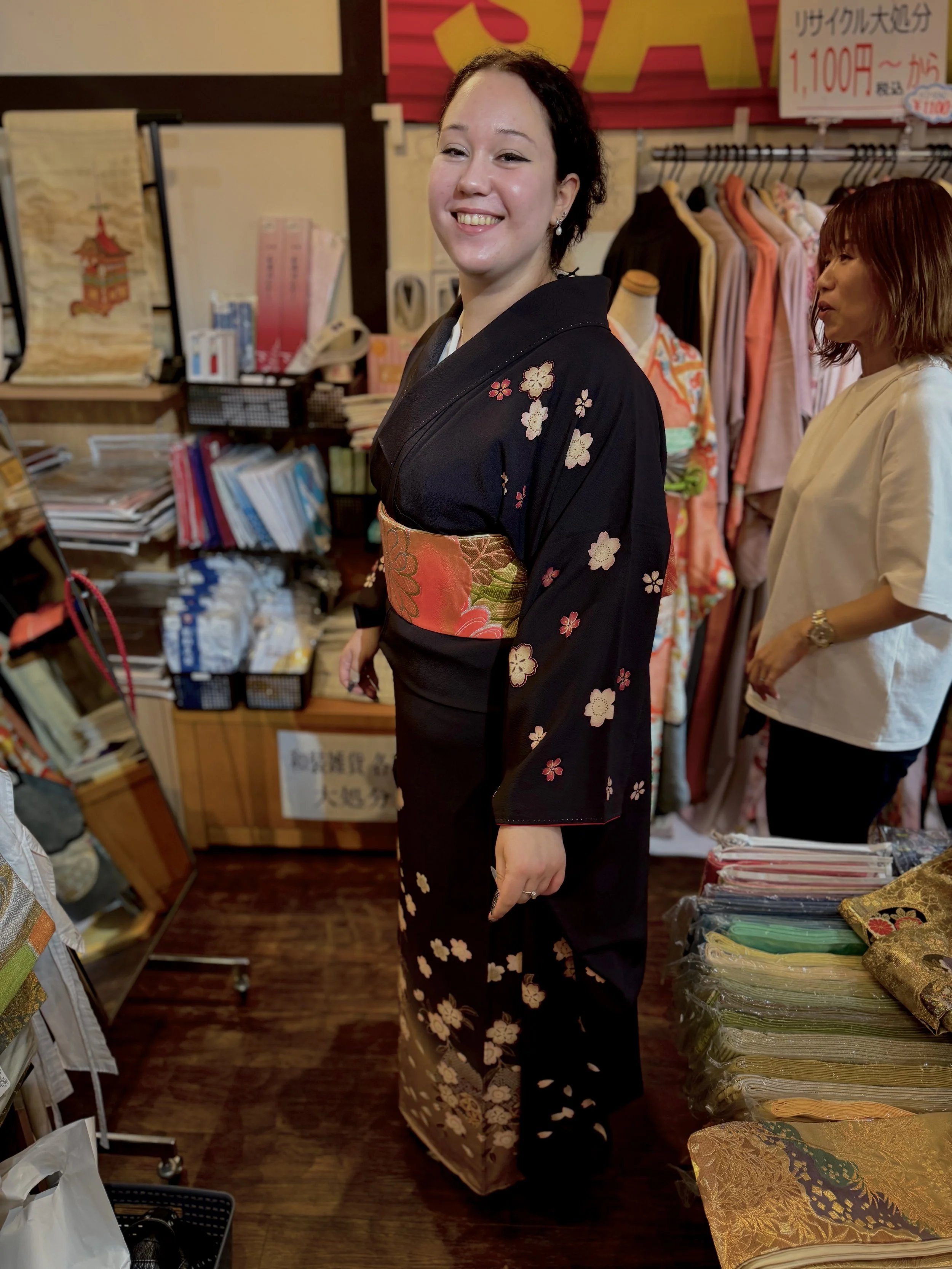
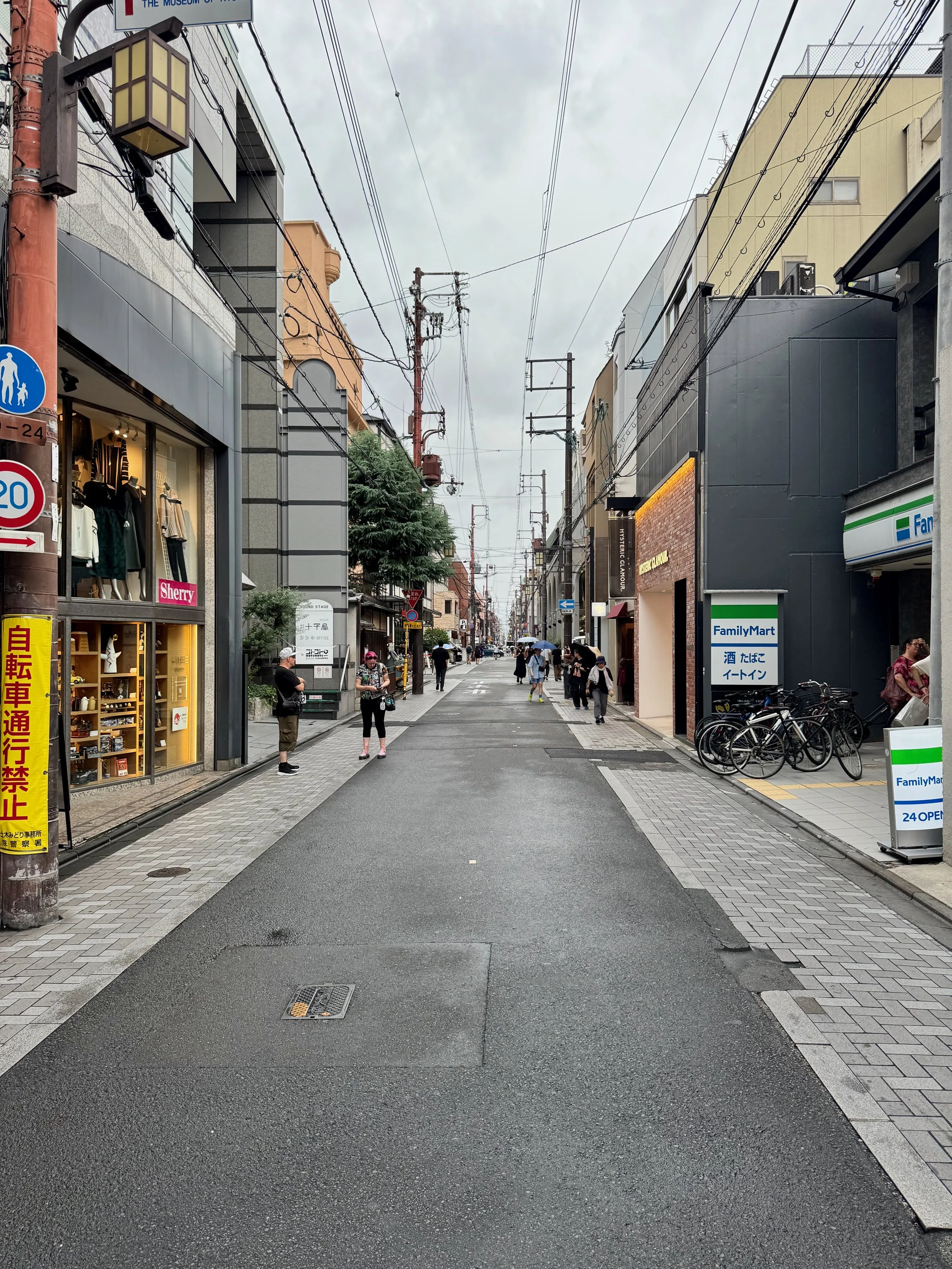
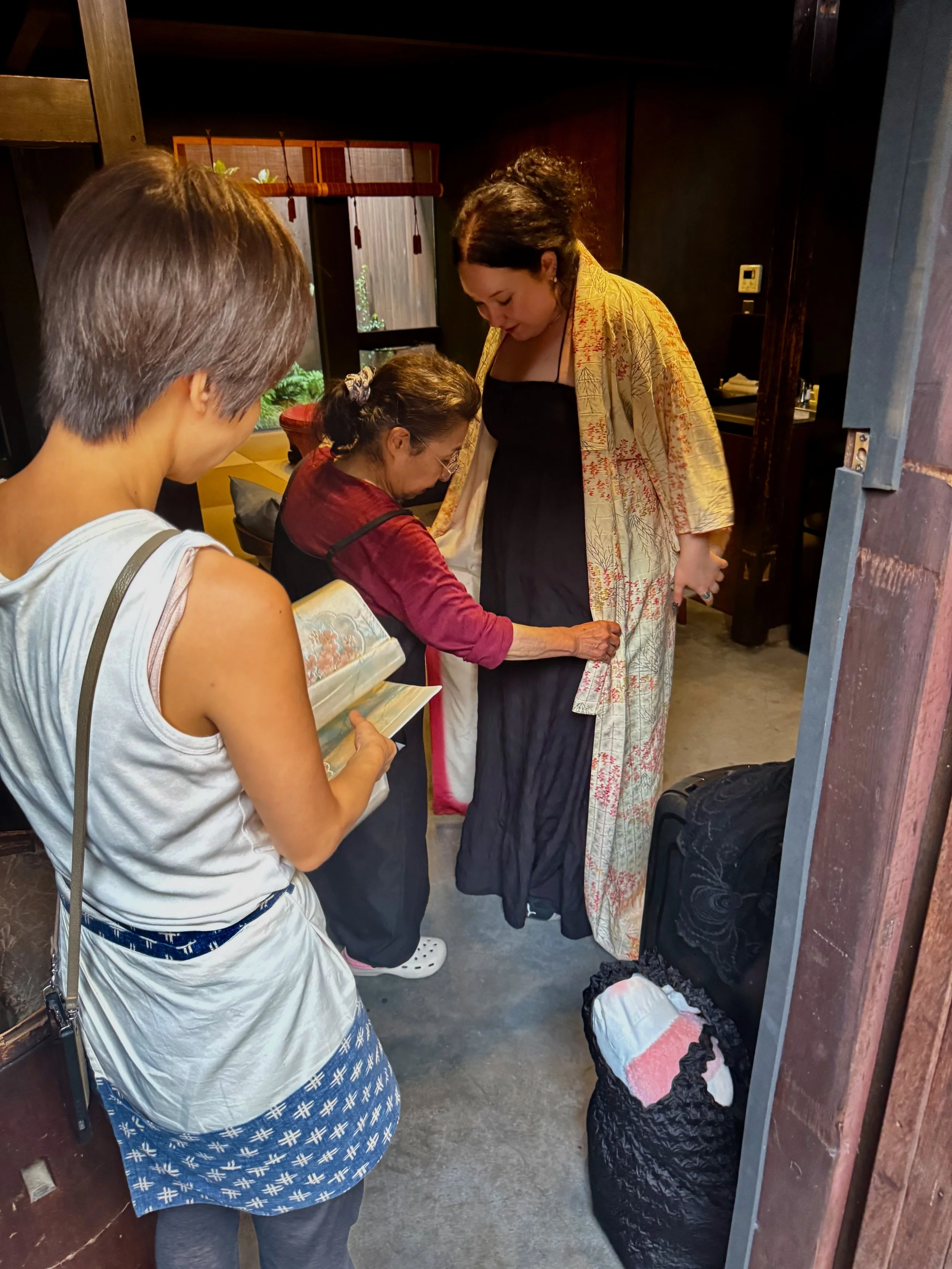
First of all, we decided to go for a long walk in the direction of the famous shopping (Teramachi) street looking for a kimono. We were interrupted by heavy tropical rain a couple of times, but we finally made it and we also found a beautiful (second hand) silk kimono. The owner ladies were very keen on selling the whole set - to be fair, it was beautiful - so we left the shop with the kimono proper, a beautiful obi (a decorative sash worn around the waist), two koshi-himo (fabric cords to keep the kimono in place under the obi), two eris (a modest white collar and a more daring pink one), tabi (split-toe socks), geta (kimono sandals) and a matching kimono purse. I felt like a barbarian for not knowing absolutely anything about this clothing culture but as you can see, you can easily write a PhD on the topic.
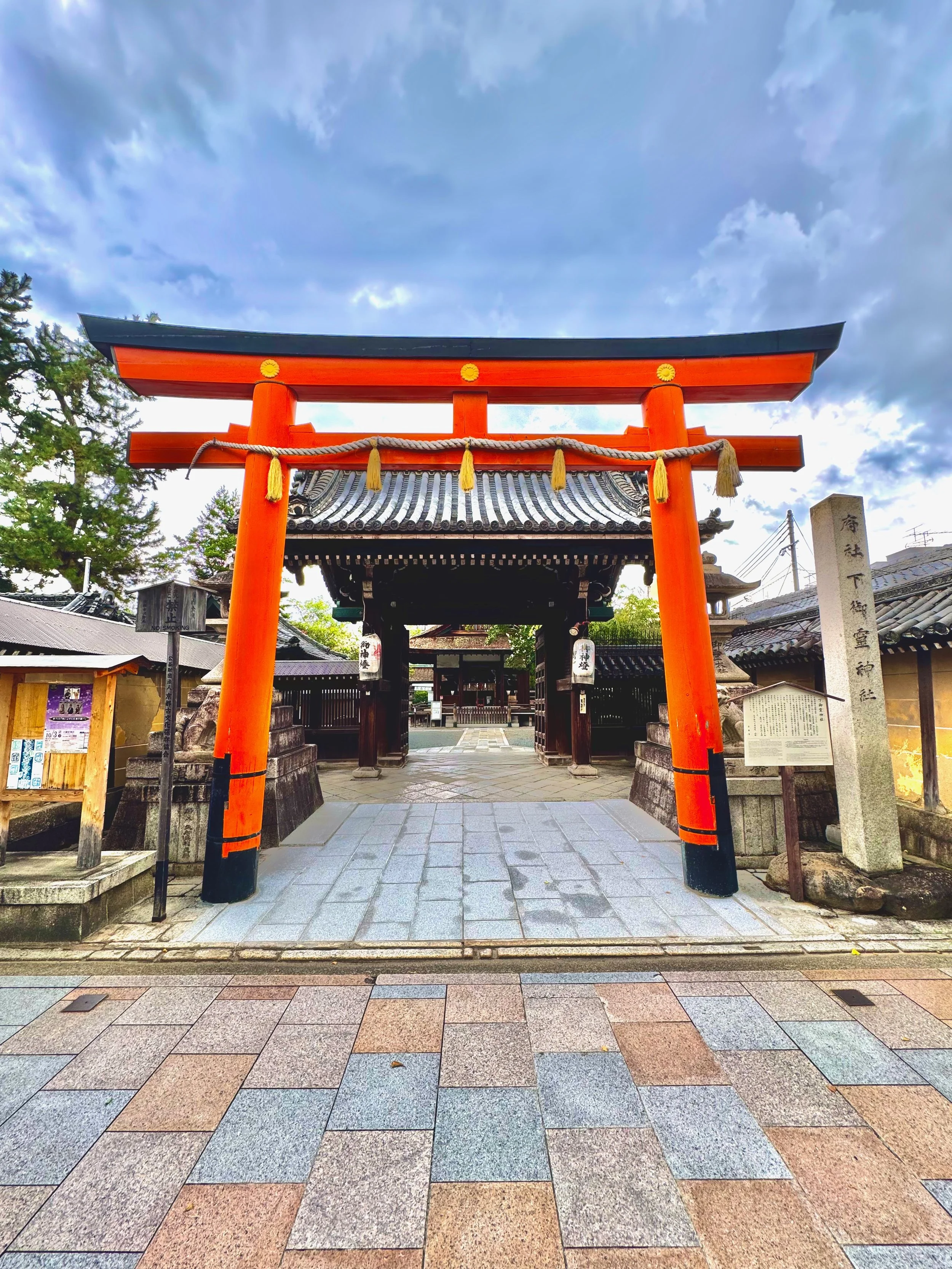
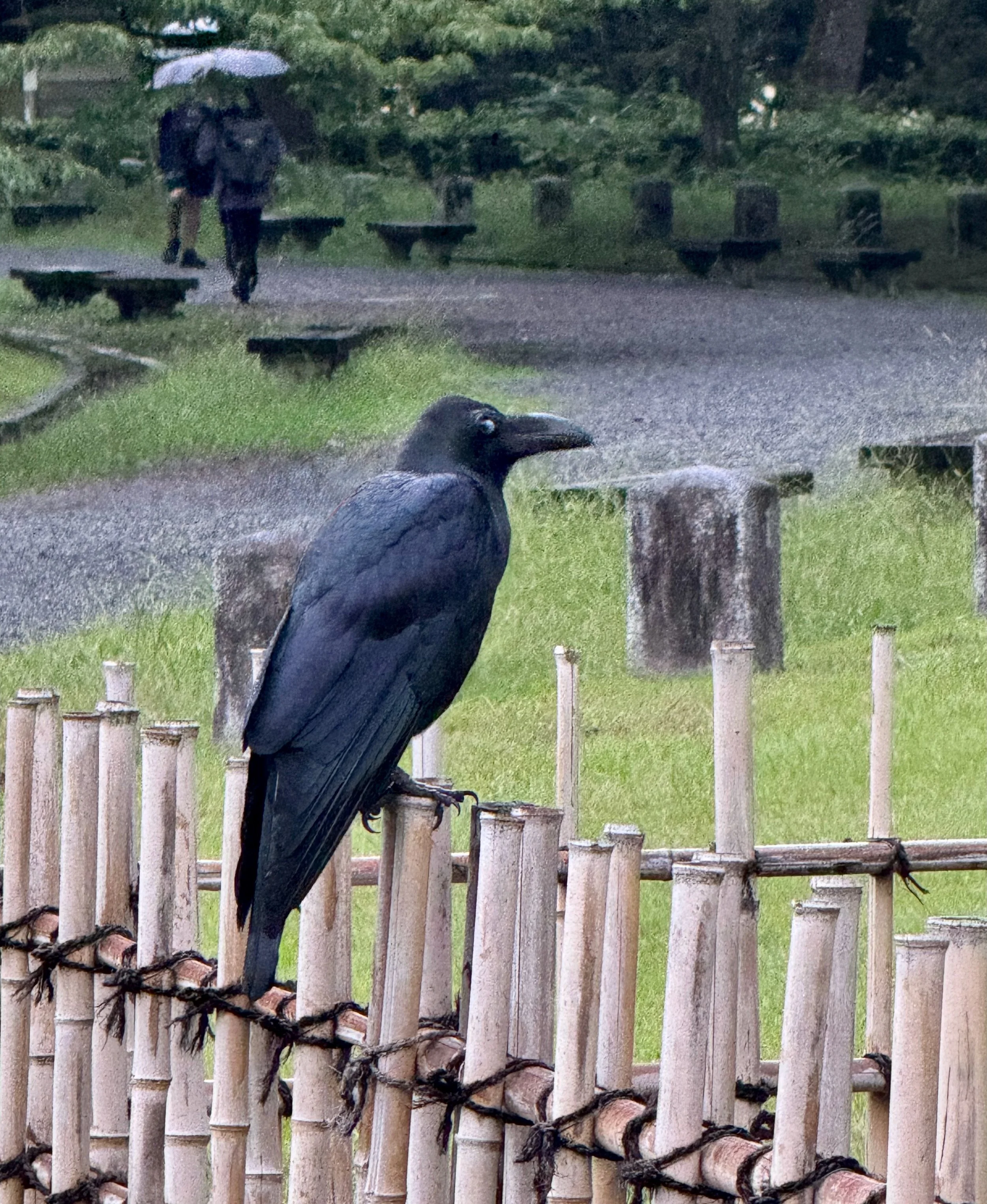
Equipped with the quite sizeable bag with kimono in it, we continued our brave walk while the rain intensified. We eventually reached the imperial palace which was hidden behind high closed walls in the middle of a deserted park. From there we took a cab back to the hotel.
E-bike
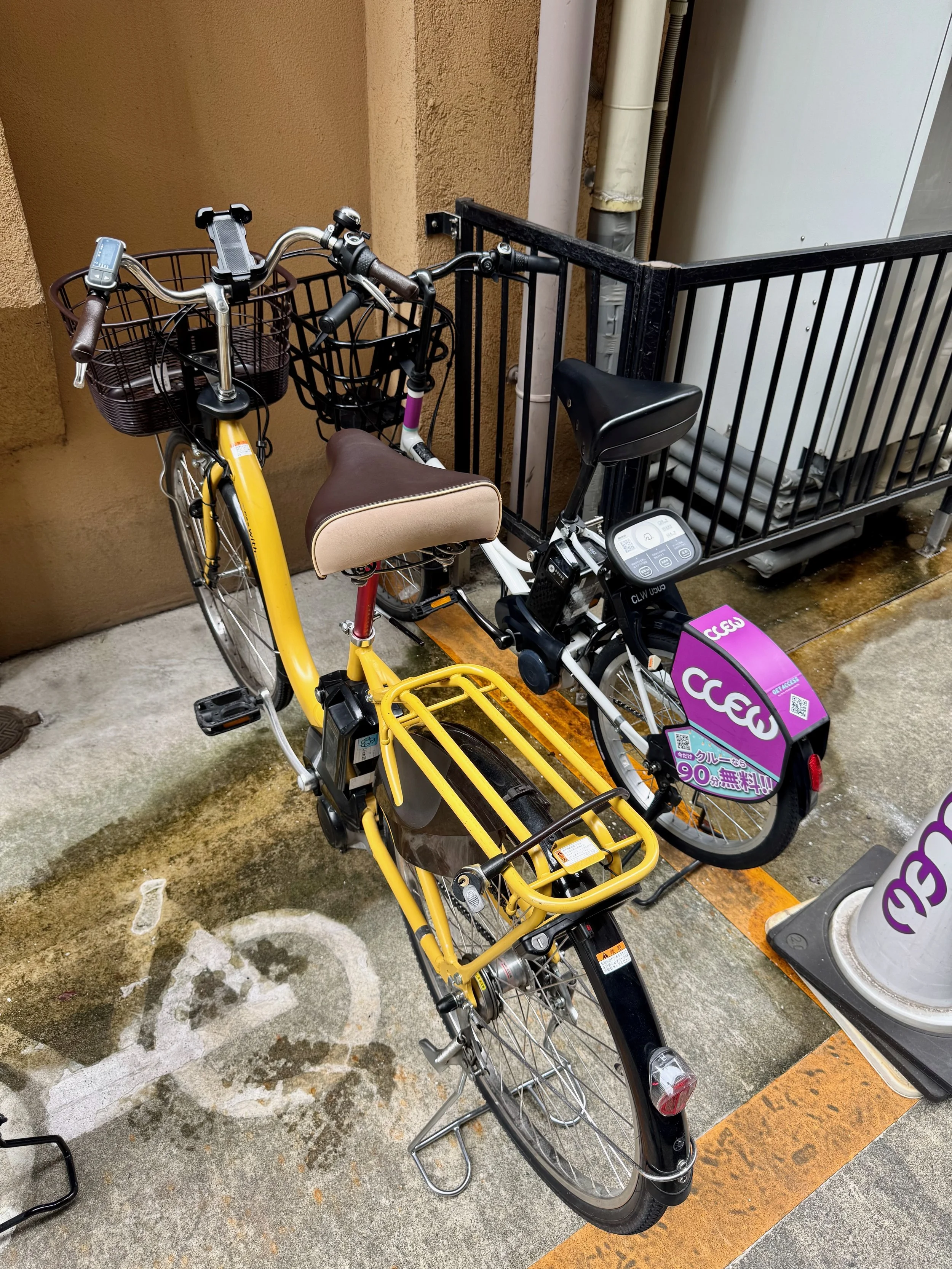
The next day we lucked out and got two e-bikes from a bike rental shop 3 minutes from our hotel without reserving in advance. It was remarkable how uneventful this process was - no hassle with deposits or passports. The shop owner also told us that in the 75 years of shop’s existence only 3 bikes were stolen. So this is a society which still largely runs on trust - a refreshing perspective for a European.
Riding a bike through Kyoto is a special experience. For us, used to bike rules in the Netherlands, bike traffic in Japan looks surprisingly chaotic for such a well organized country: there are (almost) no bike lanes, bikes are allowed to be on the pavement but sometimes there is a bike symbol on the road meaning that you should ride there. Main streets are therefore not really fun to ride, but smaller streets and especially paths along the river are blissful.
Parking bikes is a heavily regulated affair. You are not allowed to just drop your bike anywhere. You need to look for special parking spots - sometimes they are free and sometimes you need to pay. The rental shop gave us a map with bike parkings marked on it.
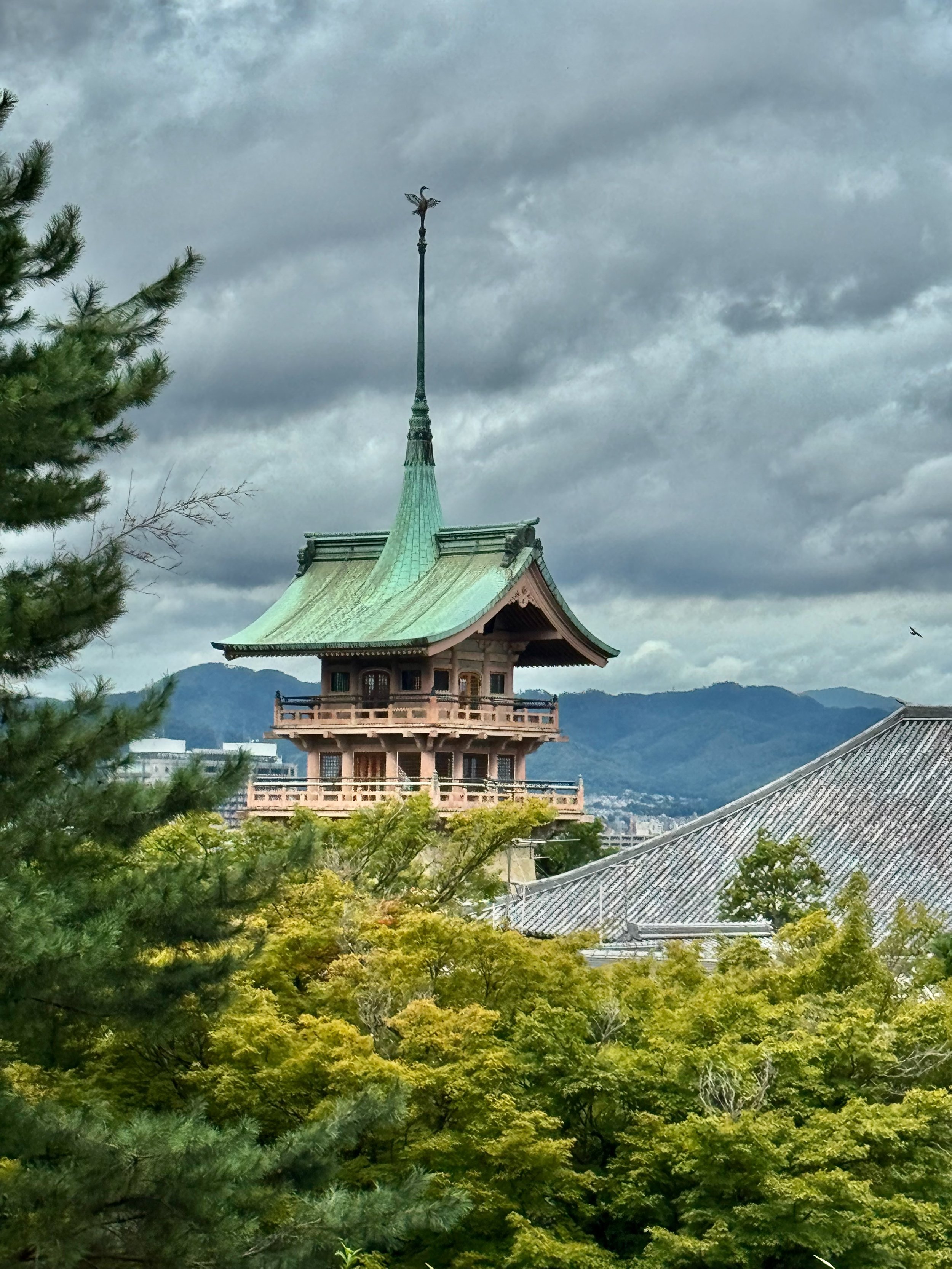
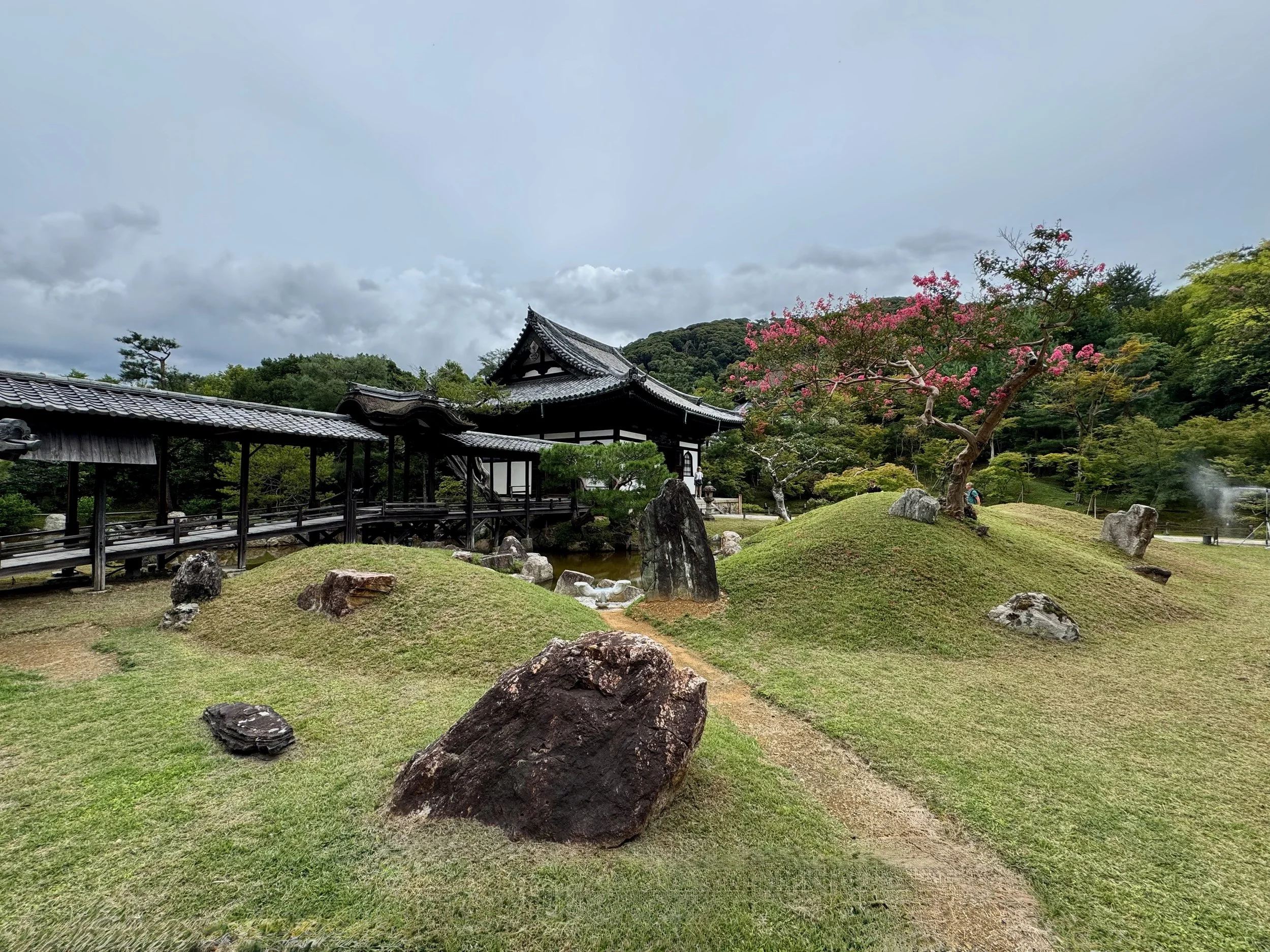
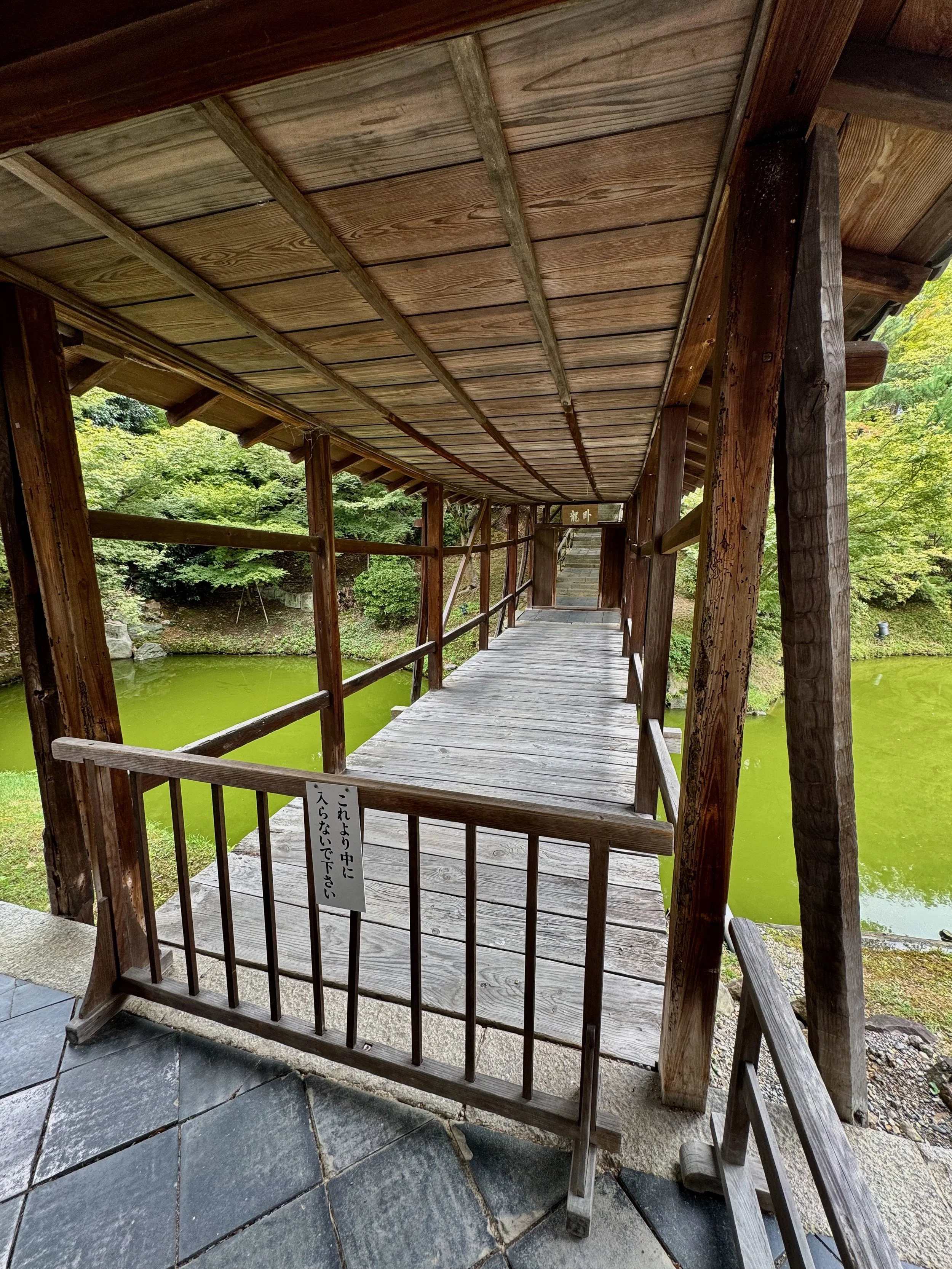
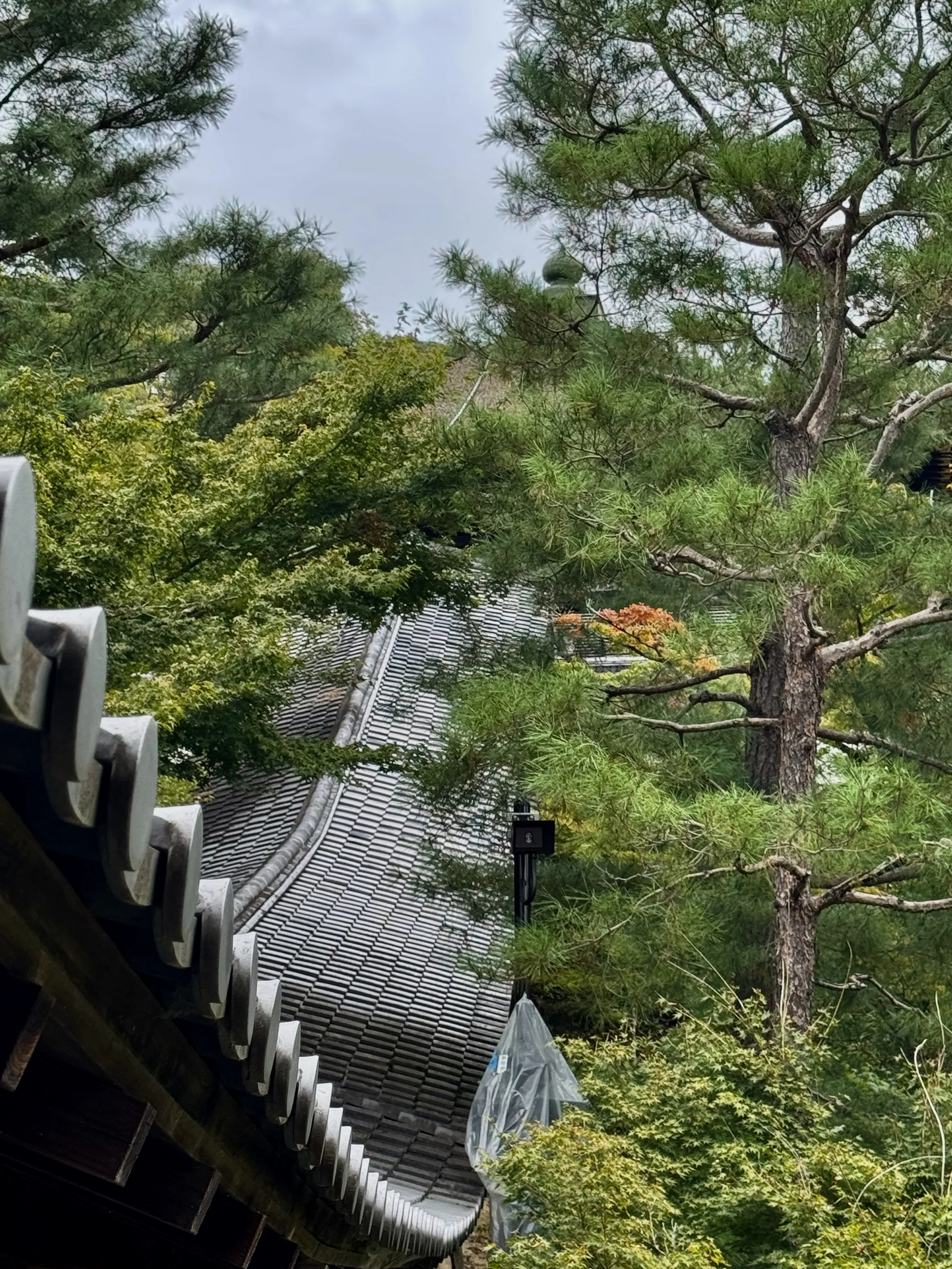
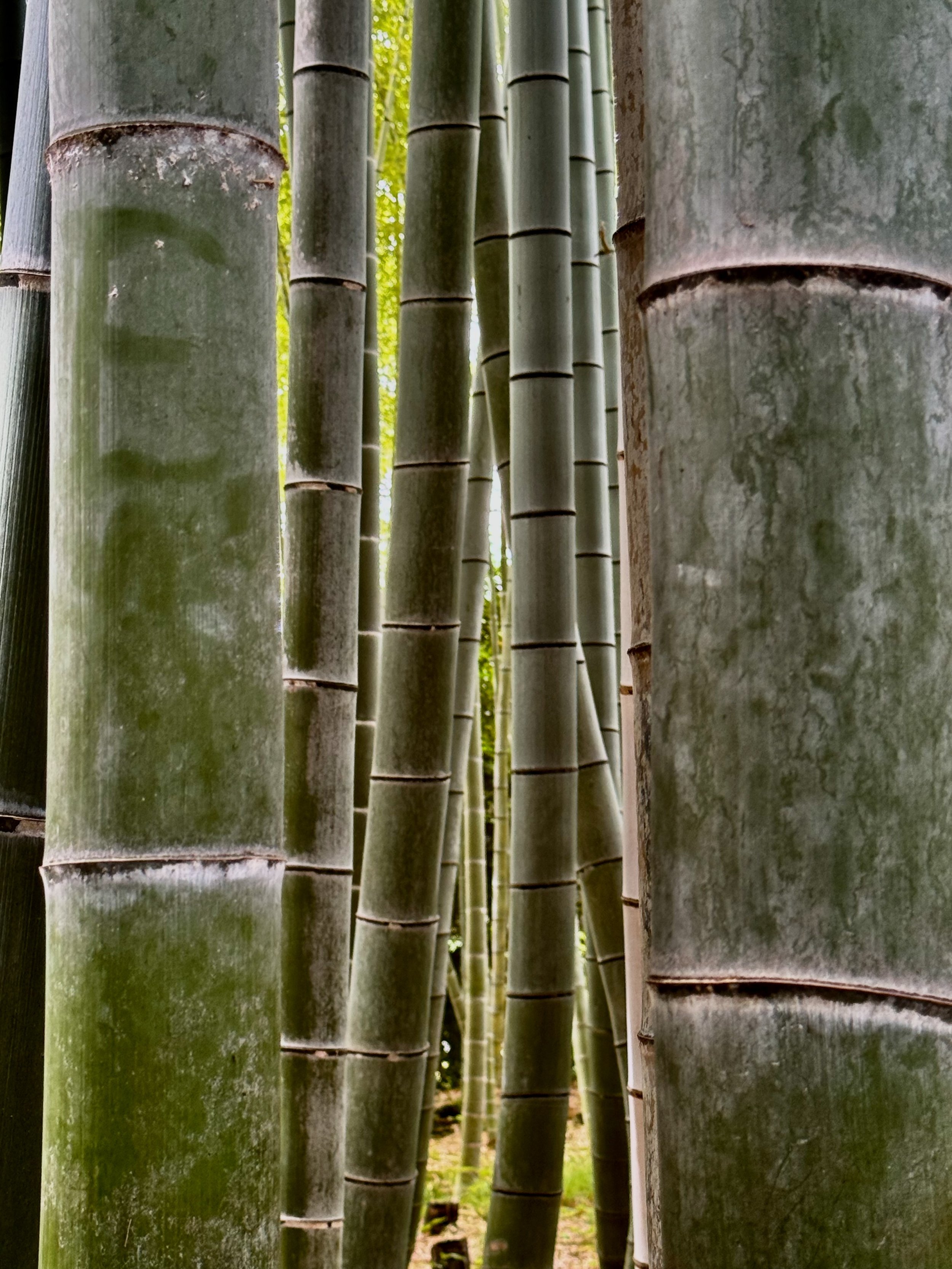
We first went to Kōdaiji Temple because we wanted to see a bamboo forest but didn’t want to cross whole Kyoto to visit the famous one. This is a very picturesque quarter with a temple, a monument to fallen soldiers during World War II, and, indeed, a small but very pretty bamboo grove.
Then we decided to re-visit the Emperor’s Palace, and rode around in the gardens (no rain this time). After this, we paid a visit to the Nijō Castle and finally we rode all the way to the restaurant where we could get omurice (traditional rice omelet) and which was recommended to us. We found a queue outside, but it moved quite swiftly.
Let me take this opportunity to rant a bit on lean manufacturing and life in Japan. You can read up on lean manufacturing, which was invented by Toyota. The property I want to highlight here is the ‘just in time’ arrival concept - the idea is that for production, the ingredients need to arrive just in time to be used. You can see this in train stations (waiting lines drawn on the platform), conbini (convenience stores, waiting line drawn on the floor and there is one “next customer” circular spot) and other places. The restaurant with the queue had its own version: first, the waiter walks along the queue and asks everyone what size their party is, then the “customers next to get a table” are invited inside and they get the menu and sit down in a special place without a table, and finally, those customers get a table and the next “next in line” go inside. The queue is managed perfectly outside, so that inside there is no stress or rush: the kitchen knows how many customers they are serving, and there is always precisely one party of customers waiting in the “buffer zone”.
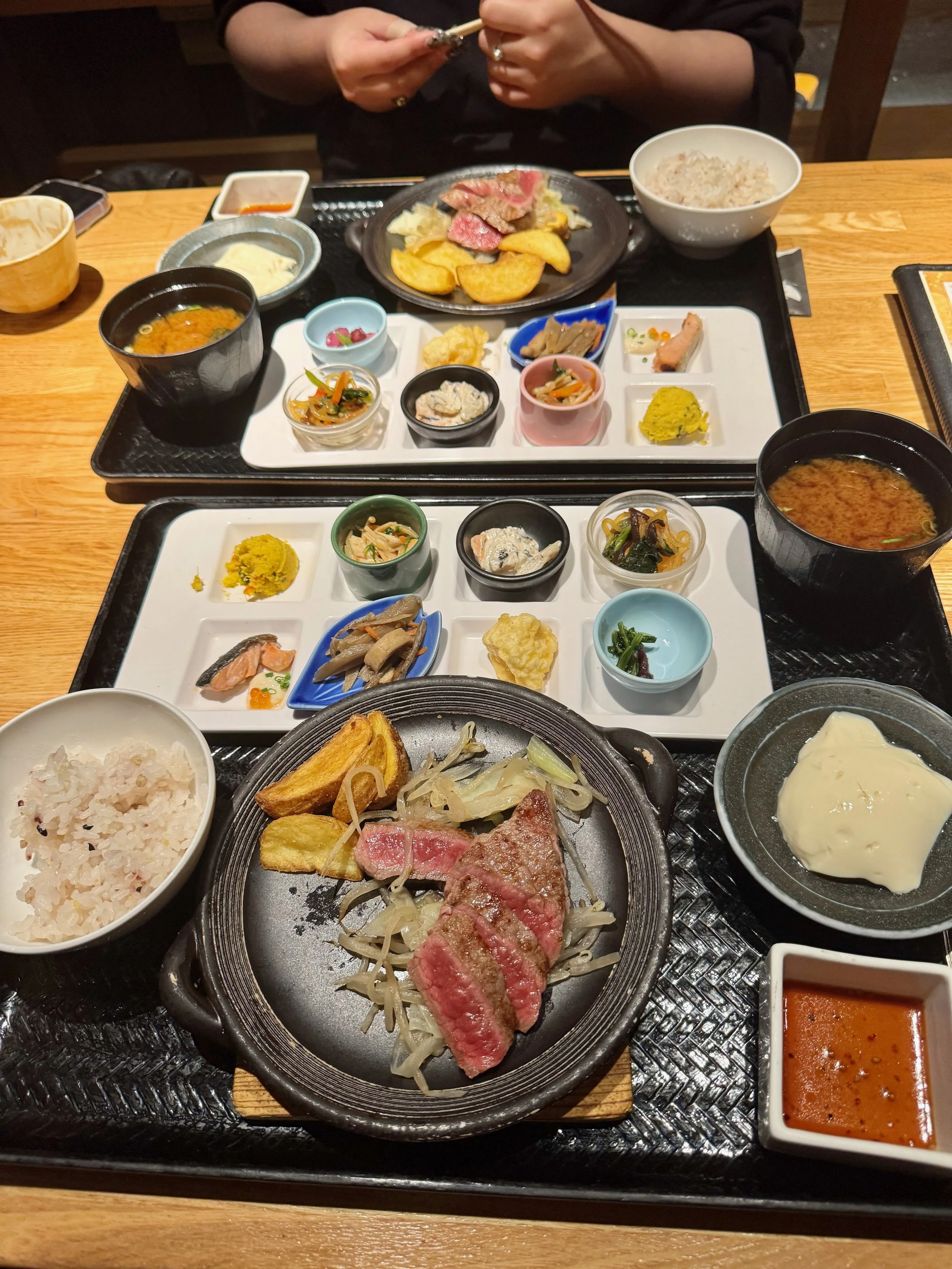
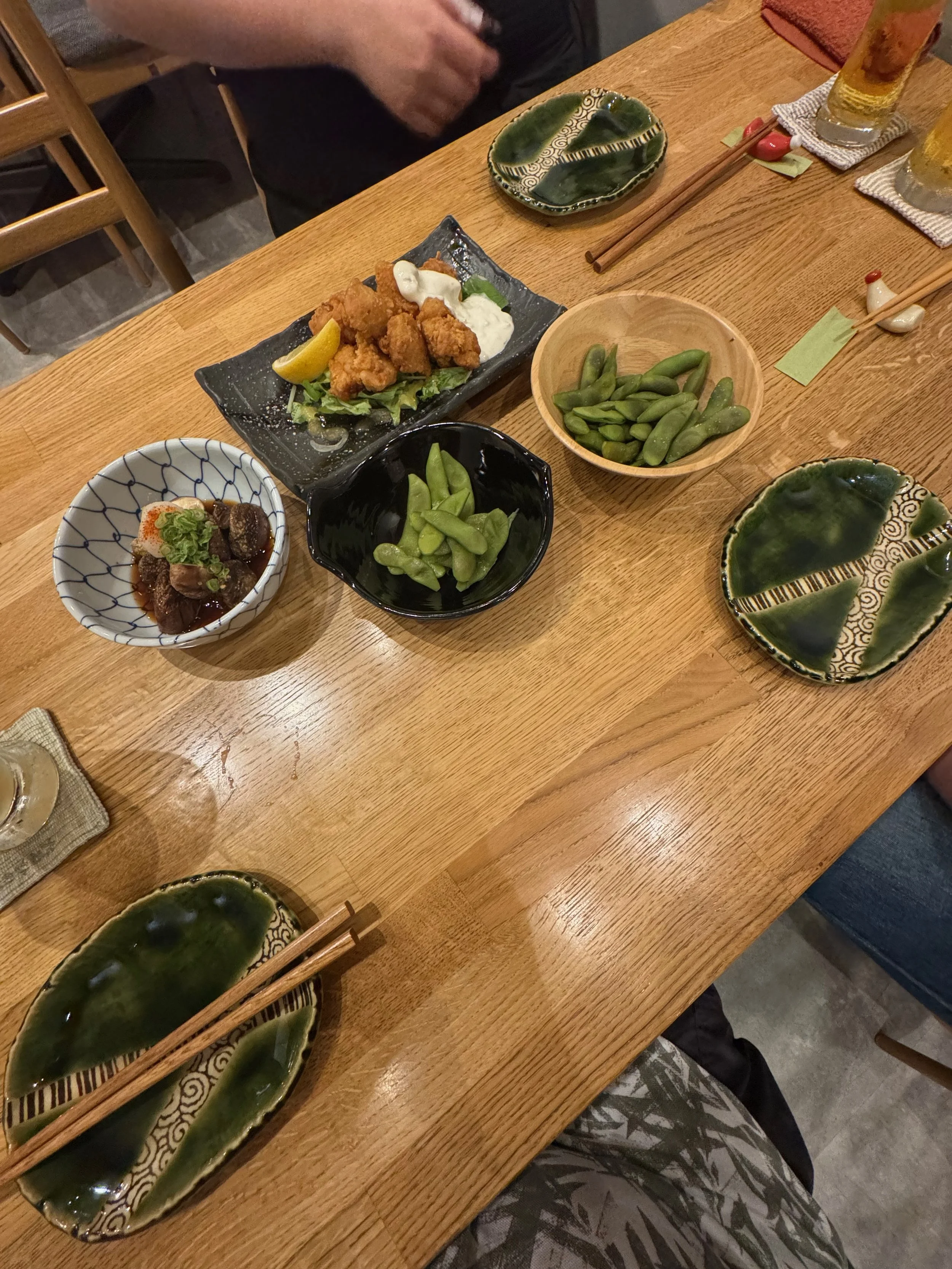
The omurice was good, although probably not my cup of tea. In general, I have a difficult relationship with Japanese food, somehow the mix of ingredients just doesn’t want to excite my palate, and because I don’t eat fish (or other produce originating in water, like seaweed), I need to ask “kore wa sakana haitte imasu ka” (does this contain fish?) every time I am not sure, and soup, even if the broth is not made from fish, usually contains seaweed. It should be noted that the couple of exceptions I tasted here represent cuisine of the highest culinary standard - but that has nothing at all to do with the “usual food” you get on every corner.
Manga Museum
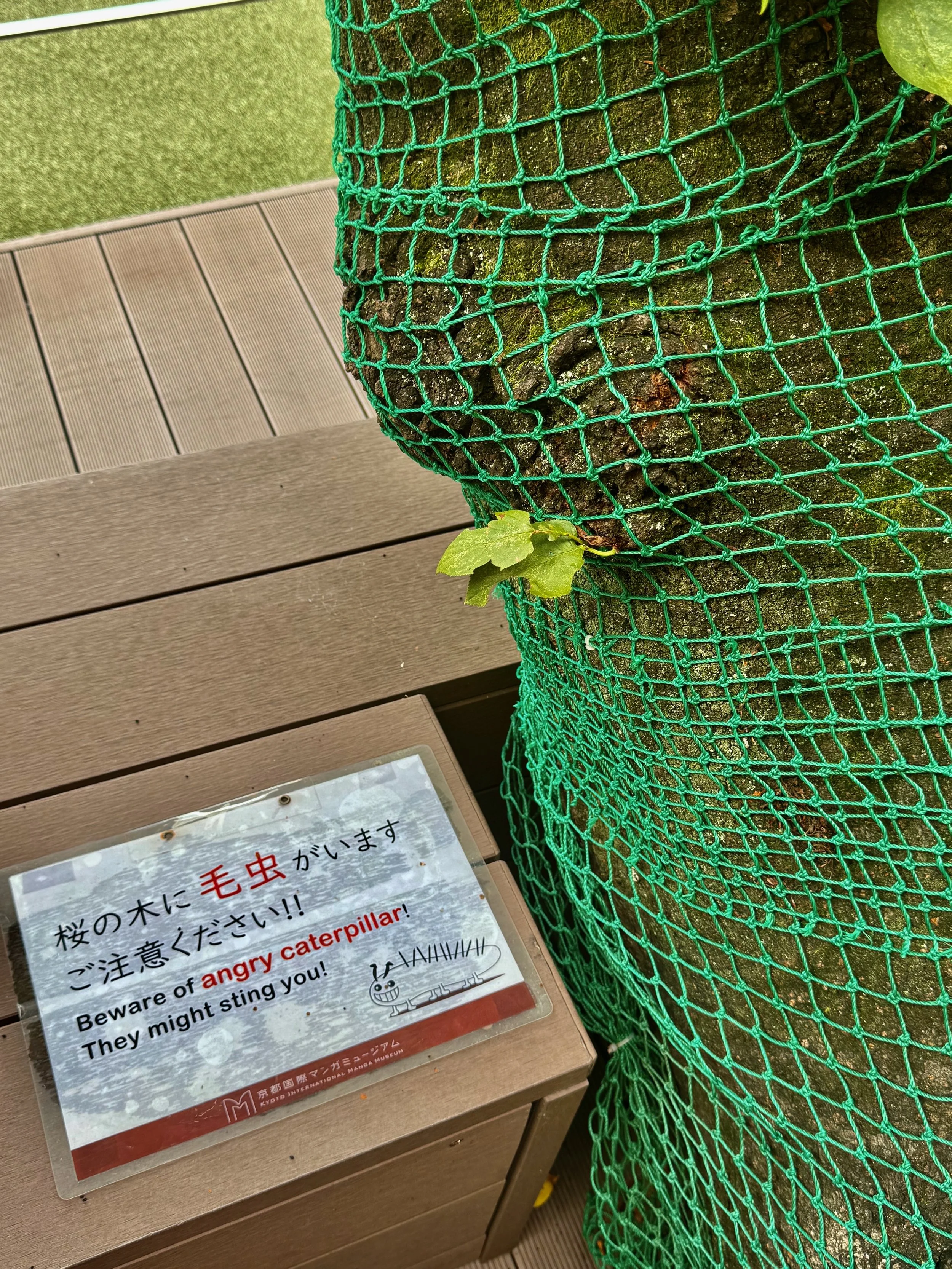
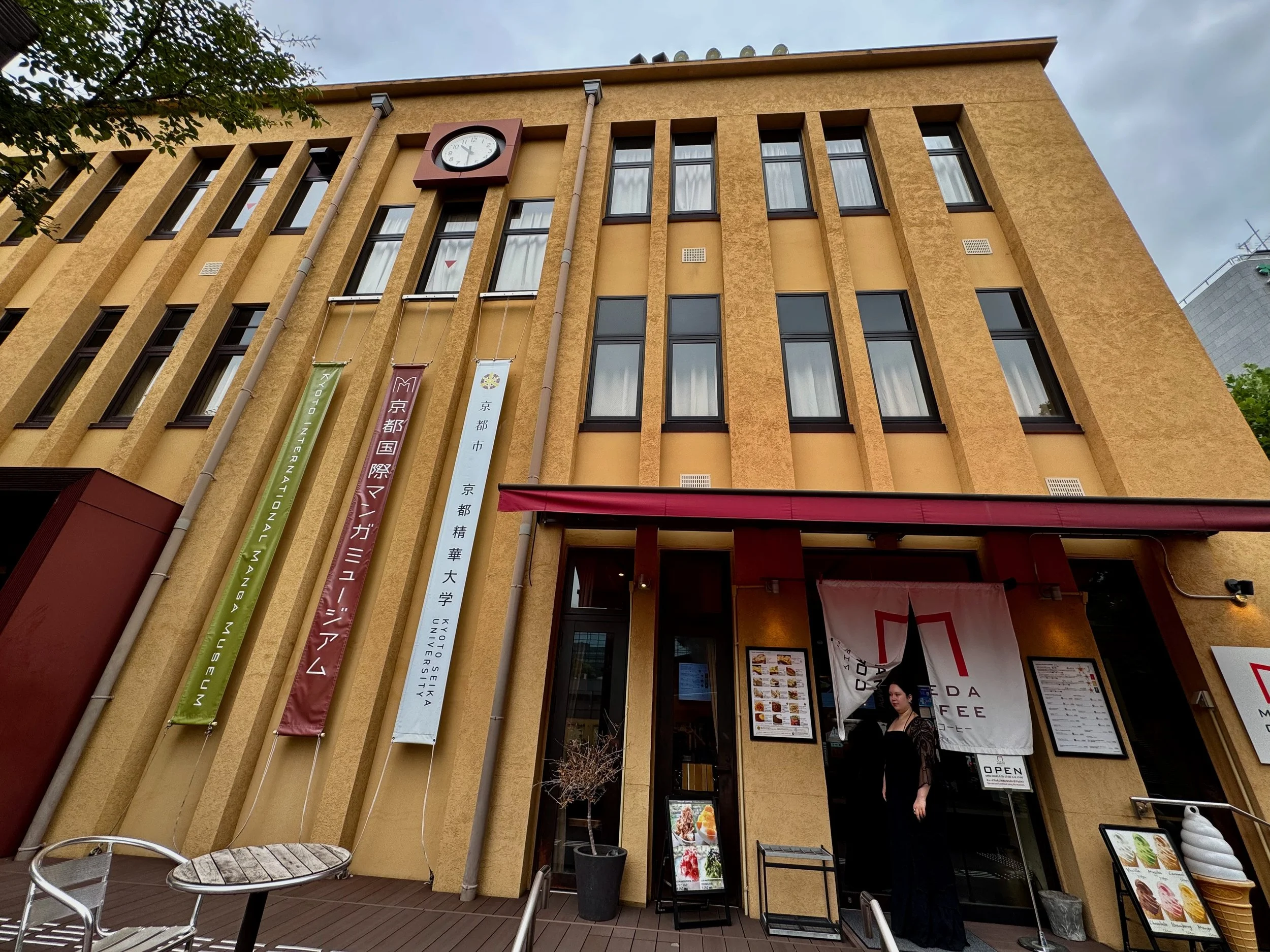
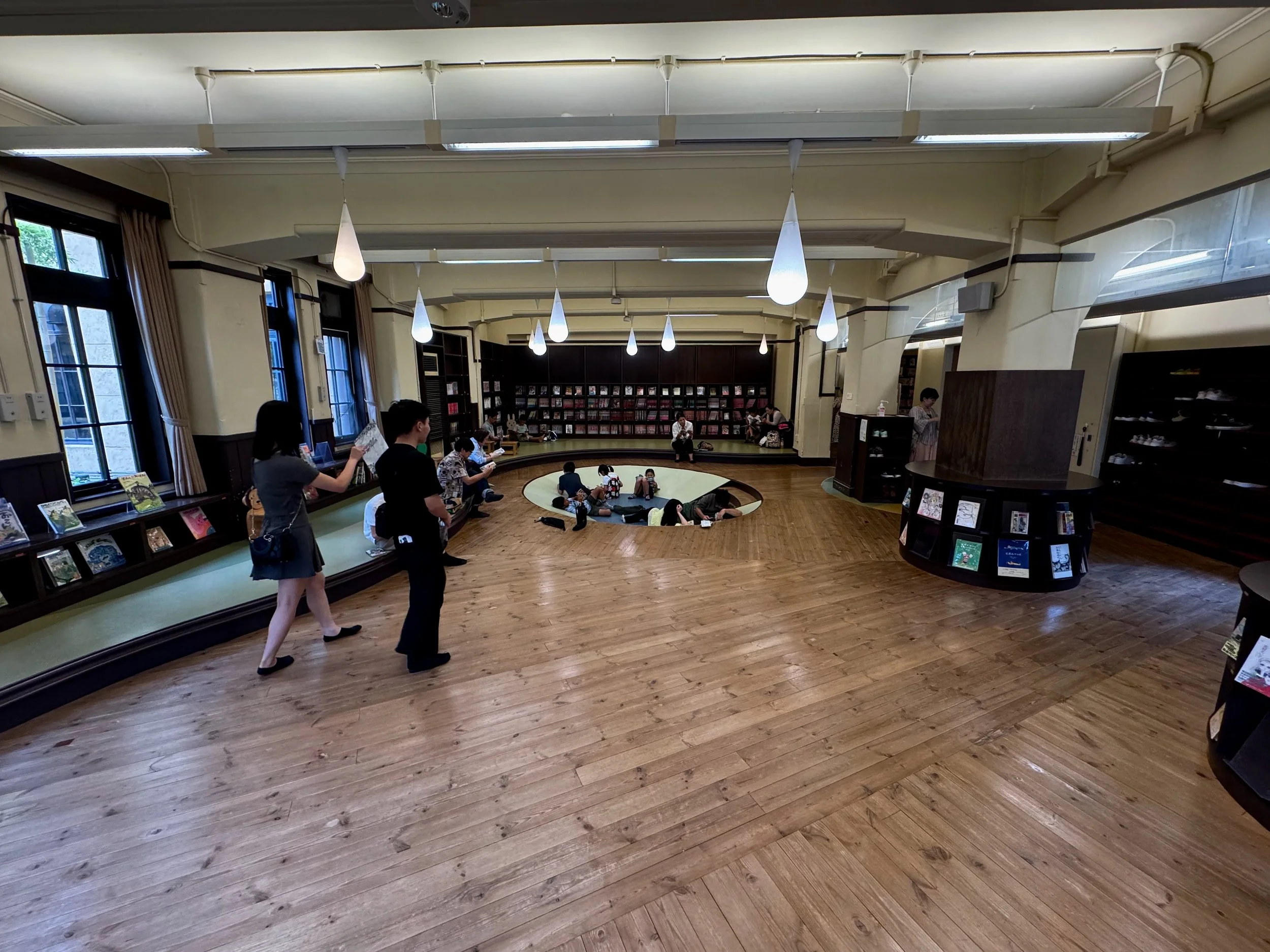
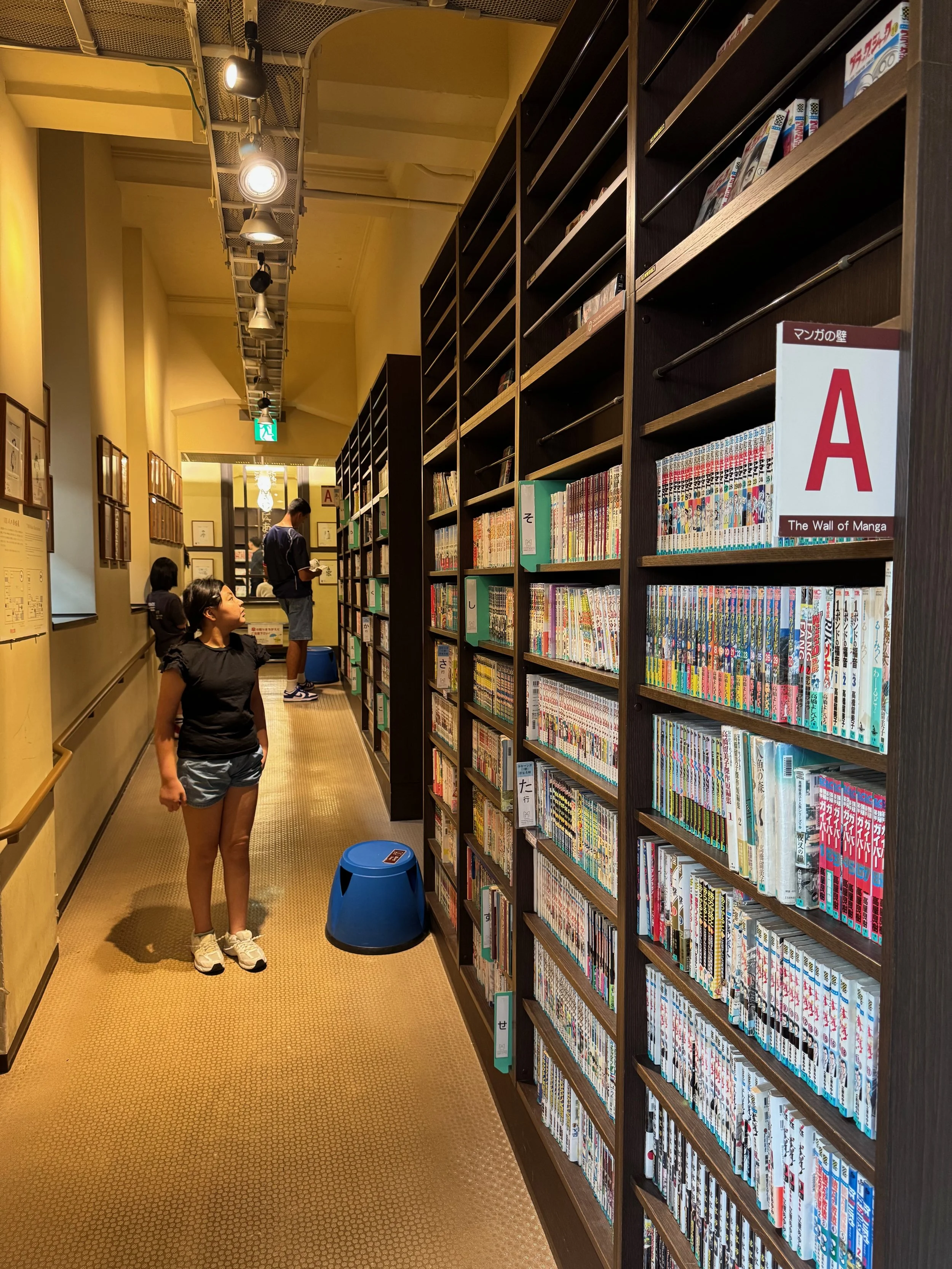
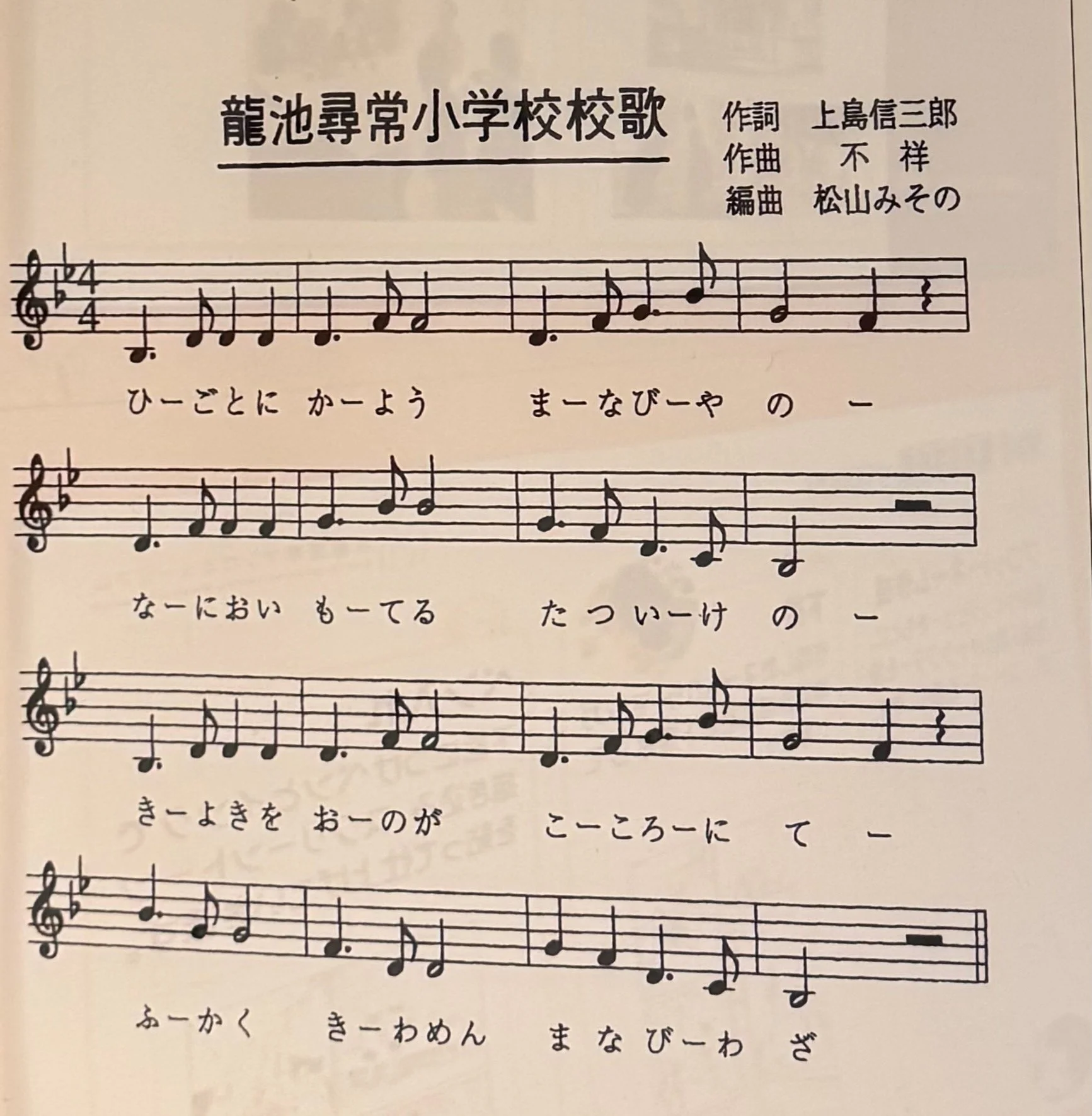
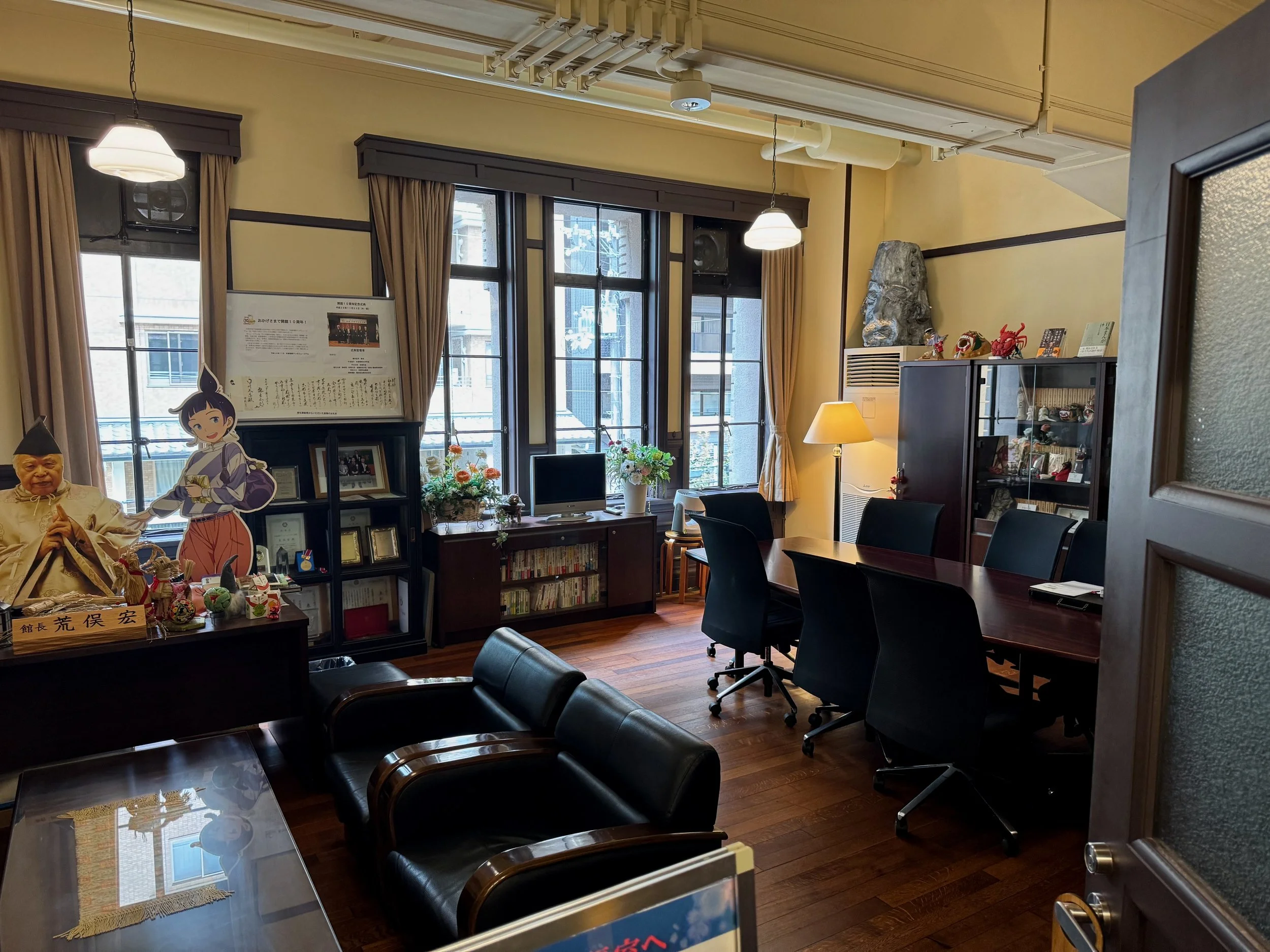
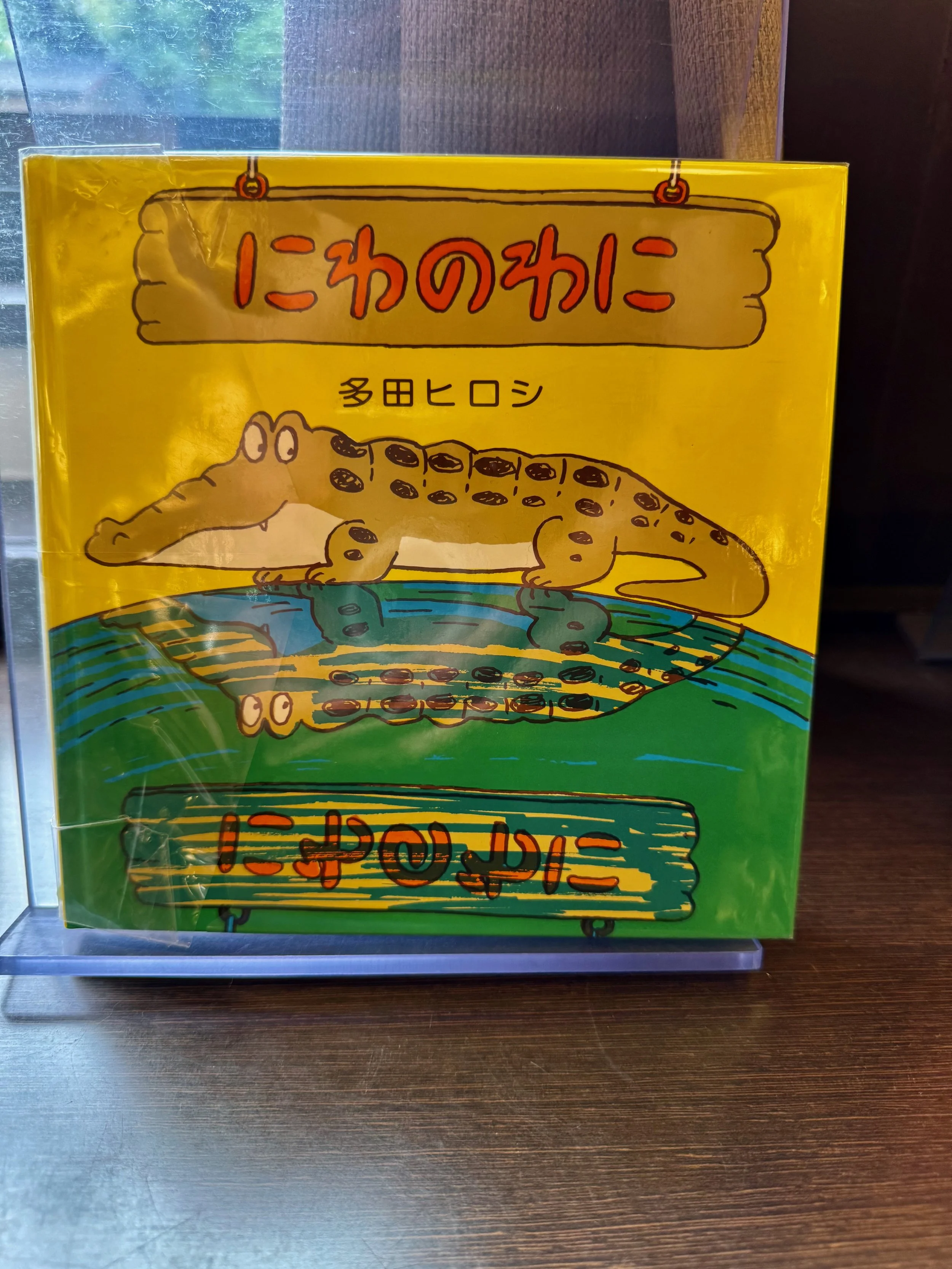
The following morning we packed our bags and took the e-bikes for the last time to travel to the famous Kyoto Manga Museum. There is a quite trendy cafe next to it where we got good coffee and some French toast. The museum itself is situated in a former elementary school building and the school vibe is clearly present. Unsurprisingly, the museum contains lots of various manga editions (including non-Japanese comics), has artists drawing your manga portrait and has a reading space for children where you can lie down without shoes. We also spotted a funny children book (see picture) called “niwa no wani” - that sounds funny and means “garden crocodile”. Museum is recommended!
The owner of the house we stayed gifted Louisa one of her kimonos and that was very touching. Maybe she liked us as guests, maybe bringing small Dutch gifts (like Delft Blue peppermints) also helped!
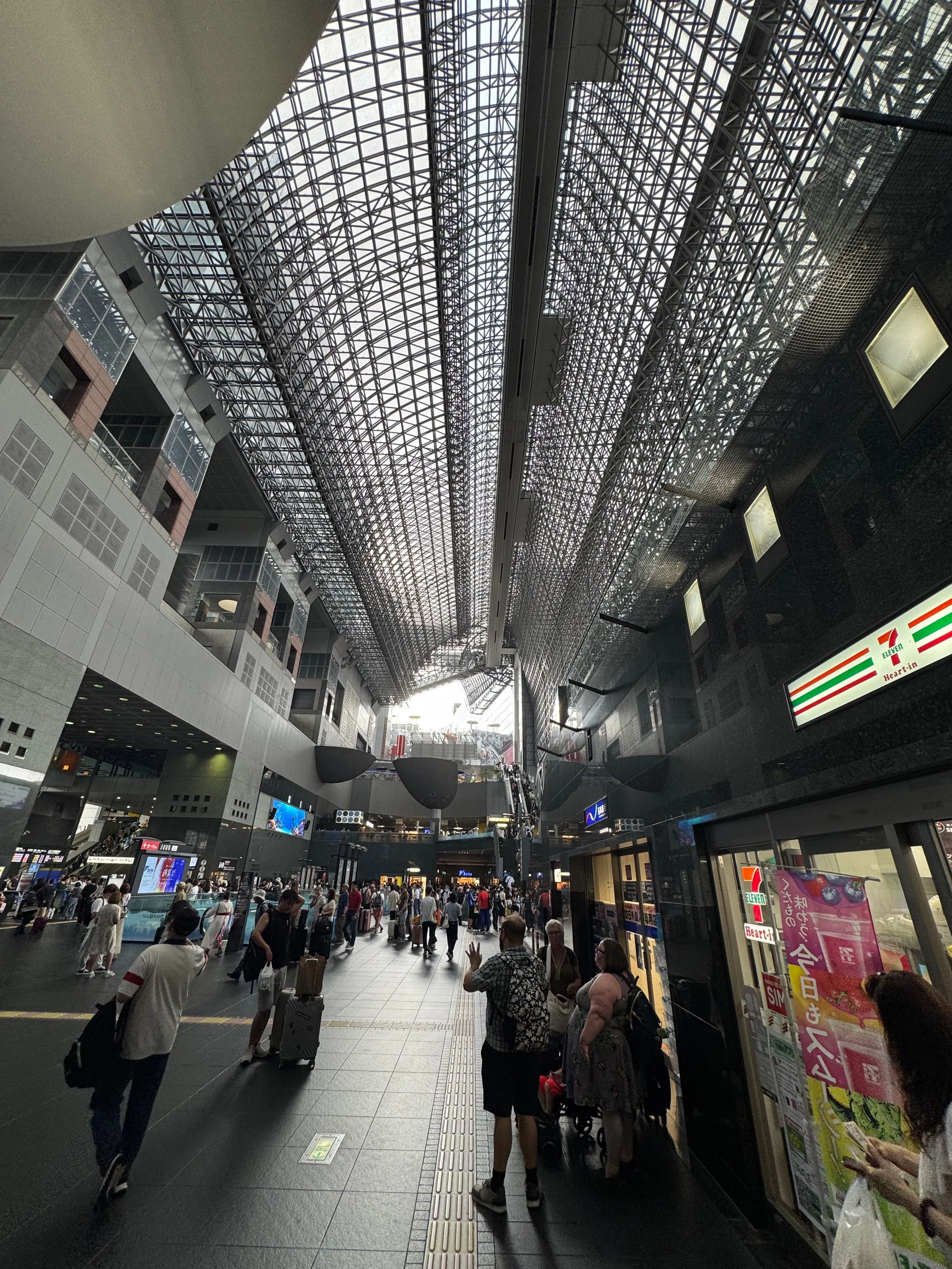
Finally, we took a taxi to the station and took the train to Osaka - but that’s for a new blog.